You buy a new light fixture thinking the expensive part is over. Then the electrician quote shows up and suddenly the installation costs more than the light itself. That catches a lot of homeowners off guard, especially with outdoor lighting or older homes.
The tricky part about lighting installation cost is that the fixture price barely tells the full story. Two homes can install the same pendant light and end up with completely different bills. Most of the difference comes from wiring access, ceiling height, switch setup, and the small labor details people rarely think about until the project starts.
Some installations take under an hour. Others turn into half-day jobs because the junction box is outdated or the wall switch wiring is a mess behind the drywall. And honestly, that’s where costs quietly climb.
Why Lighting Installation Cost Changes So Much Between Homes
A basic light replacement in a newer home can feel surprisingly affordable. The electrician removes the old fixture, connects the new one, tests it, and leaves. Simple jobs like that may cost around $100 to $250 depending on location and fixture type.
But older homes tend to change everything.
A lot of houses built decades ago were never designed for today’s heavier fixtures or layered lighting setups. Once the old fixture comes down, electricians sometimes find loose wiring, missing grounding, or ceiling boxes that can’t safely support modern chandeliers.
That’s usually the moment when a quick install stops being quick.
One detail homeowners often miss is ceiling accessibility. A vaulted ceiling or staircase lighting setup almost always increases labor time. Electricians may need taller ladders, scaffolding, or a second worker just to safely mount the fixture.
Outdoor lighting adds another layer. Weatherproof wiring, trenching, and GFCI protection all increase the complexity. The light itself may only cost $80, but the safe installation work behind it is what drives the bill.
If you’re budgeting for broader projects, this complete guide to home repair pricing categories helps put lighting upgrades into perspective alongside other common home expenses.
Indoor Lighting Installation Usually Costs Less Than People Expect
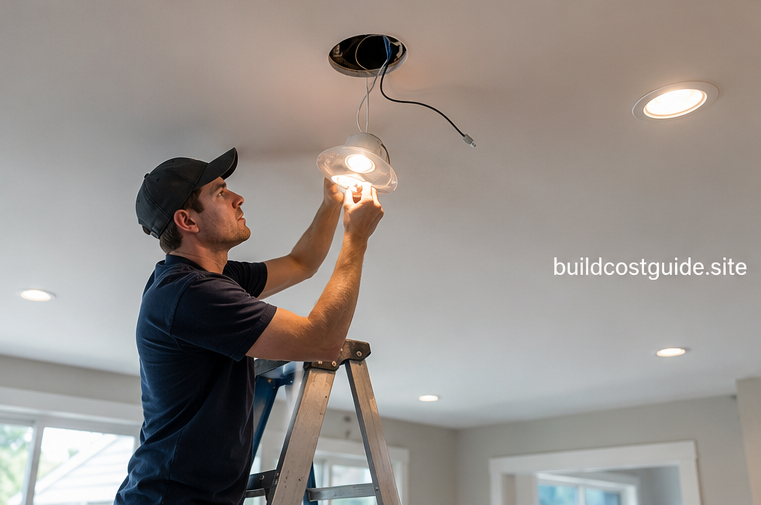
Most indoor lighting jobs fall somewhere between manageable and mildly annoying. The costs usually depend more on the room layout than the actual light fixture.
For example, replacing a flush mount light in a bedroom is often straightforward. The wiring already exists and the electrician doesn’t need to open walls. That kind of job is usually on the lower end of lighting installation cost ranges.
Kitchen lighting is different.
Recessed lighting installations tend to cost more because spacing matters, wiring paths matter, and the ceiling sometimes needs patching afterward. Homeowners often underestimate how much labor goes into evenly placing recessed cans across a room.
And dimmer switches add another small cost that people rarely include upfront.
The interesting part is that many homeowners regret not adding more lighting while the electrician is already there. Once labor is already being paid for, installing one extra recessed light or under-cabinet fixture often costs far less than scheduling another visit months later.
That happens constantly during kitchen remodels.
Another small thing people notice later is lighting temperature consistency. Mixing warm and cool LED bulbs across connected rooms can make a renovated space feel strangely unfinished even when everything is brand new.
It sounds minor, but after a few weeks it becomes hard to ignore.
Outdoor Lighting Installation Gets Expensive Fast
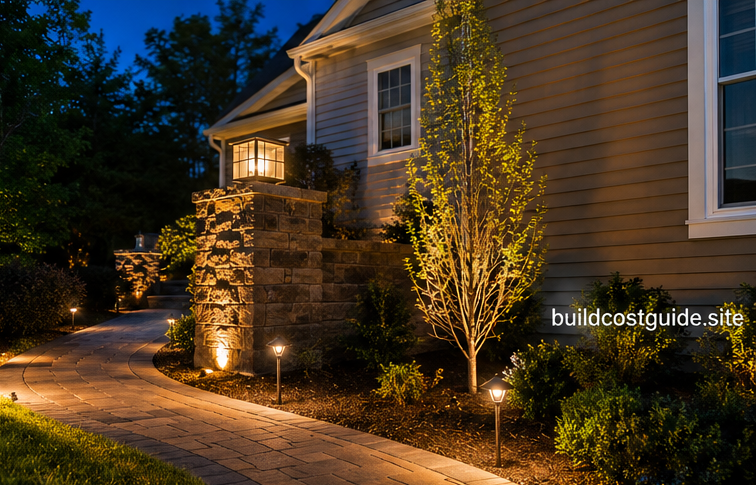
Outdoor lighting looks simple from the sidewalk. Underneath the ground, it’s rarely simple.
Landscape lighting installation often involves trenching, waterproof connectors, transformers, and low-voltage cable routing across long distances. Even a modest backyard setup can require several hours of labor.
The most common surprise is pathway lighting.
Homeowners assume small lights mean small installation costs. In reality, spacing, wire routing, and avoiding irrigation lines can make those projects more time-consuming than expected.
Security floodlights also vary a lot in price because mounting location changes everything. Installing a motion light beside a garage is usually easy. Installing one above a second-story roofline is not.
And then there’s existing wiring.
A lot of outdoor lighting projects become expensive because there’s no nearby power source. Running new electrical lines through exterior walls or underground conduit increases labor quickly.
One thing many people only realize later is how outdoor lighting affects maintenance. Cheap fixtures often look great during the first season, then moisture slowly gets inside the housing. By the second rainy season, flickering starts showing up.
That’s why many electricians quietly recommend spending slightly more on weather-rated fixtures instead of chasing the absolute lowest installation quote.
Smart Lighting Installation Sounds Easy Until Compatibility Issues Start
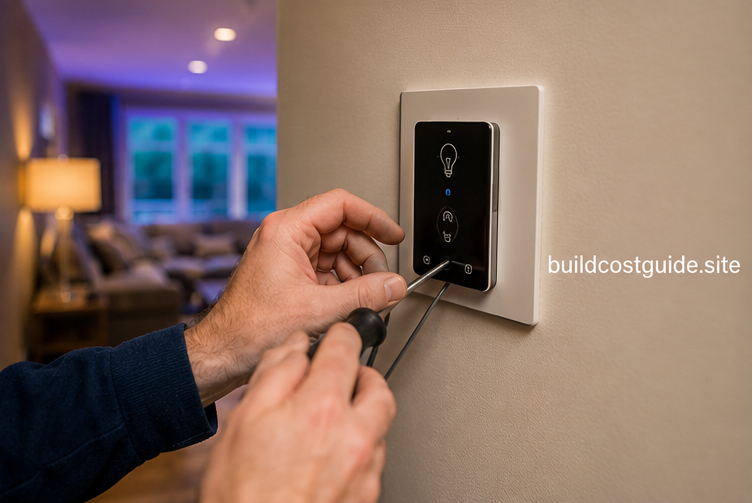
Smart lighting has lowered fixture prices, but installation problems still happen more than people expect.
The biggest issue is usually older wiring.
Many smart switches require neutral wires. Older homes often don’t have them inside switch boxes. Homeowners buy smart dimmers online, then discover installation requires additional rewiring before the switch can even function properly.
That changes the project cost immediately.
Wi-Fi coverage also matters more than people think. Outdoor smart lighting near detached garages or backyard areas sometimes becomes unreliable because the signal strength drops too much.
And compatibility issues are everywhere.
Some dimmable LEDs buzz with older dimmer switches. Some smart systems work smoothly with Alexa but behave inconsistently with Apple HomeKit. The products technically install correctly, but the daily experience becomes frustrating.
That’s why experienced electricians often ask about the homeowner’s ecosystem before installation even begins.
One overlooked insight is that overly complicated lighting automation tends to age poorly. At first, app-controlled scenes feel impressive. Months later, many people just want a normal wall switch that responds instantly without reconnecting to Wi-Fi.
The simpler setups often last longer with fewer headaches.
Labor Costs Usually Matter More Than Fixture Prices
People spend hours comparing chandelier prices online but barely think about labor variables. In reality, labor is often the biggest factor in lighting installation cost.
Electricians typically charge either hourly or per fixture. In many US cities, hourly rates range between $65 and $150 or higher depending on licensing and demand.
But labor pricing changes based on things homeowners don’t always see immediately.
Here are some common cost drivers:
- Difficult attic access
- High ceilings
- Old aluminum wiring
- New switch installations
- Drywall repair afterward
- Panel capacity upgrades
- Long outdoor cable runs
A heavy chandelier can also require structural reinforcement above the ceiling box. That alone adds both time and material costs.
And permits sometimes enter the picture unexpectedly.
Simple fixture swaps usually don’t need permits. New wiring circuits often do. Some municipalities are stricter than others, especially for exterior electrical additions.
One pattern electricians notice constantly is homeowners stacking too many “small requests” into one visit without realizing the labor impact. Adding a dimmer here, replacing a fan there, relocating a switch nearby — individually they sound minor. Together they can turn into a several-hour service call.
That’s why bundled estimates sometimes look surprisingly high at first glance.
The Cheapest Lighting Installation Quote Isn’t Always the Best Deal
Lighting is one of those home upgrades where bad installation problems show up slowly.
Loose connections may work fine for months before flickering begins. Poor outdoor sealing may survive one season before corrosion appears. Cheap recessed lighting installations sometimes create uneven spacing that becomes painfully obvious once the room is fully furnished.
The frustrating part is that fixing poor electrical work later often costs more than doing it correctly the first time.
A common mistake is focusing only on the total quote without asking what’s included. Some electricians include disposal, patching, and testing. Others charge separately for every small adjustment.
Another thing homeowners regret later is choosing fixtures before measuring actual room scale. Oversized pendant lights can dominate smaller dining rooms. Tiny sconces disappear visually on large exterior walls.
The photos online rarely show how lighting proportions feel in real houses.
And brightness expectations cause issues too. Many people replace older fixtures with stylish LEDs that actually produce less usable light than expected. The room looks modern but feels dim at night.
That usually becomes noticeable during winter evenings.
The best lighting projects tend to balance three things:
- practical brightness
- fixture quality
- realistic installation labor
Ignoring one of those almost always creates frustration somewhere later.
At the end of the day, lighting installation cost is less about the fixture itself and more about the hidden conditions around it. Wiring access, ceiling type, outdoor exposure, and labor complexity matter far more than most homeowners expect at the beginning.
That’s why two nearly identical-looking projects can end up hundreds of dollars apart. And honestly, the difference usually makes sense once the walls open up or the ladder comes out.