buildcostguide.site – Drainage system installation cost in the US explained with real examples, pricing factors, and smart ways to save on yard and foundation drainage.
You don’t really think about drainage until your yard turns into a swamp after a heavy rain or your basement starts smelling damp. That moment when water pools near your foundation That’s usually when homeowners start Googling drainage system installation cost.
In many cases, the problem builds slowly. A little standing water here, a soft patch of lawn there. Then one season, it gets worse. Suddenly, you’re dealing with foundation concerns or water creeping toward your home. Understanding what it costs and what actually drives that cost can save you from making rushed decisions.
Let’s break it down in a way that actually makes sense for real homeowners in the U.S.
What Drives Drainage System Installation Cost
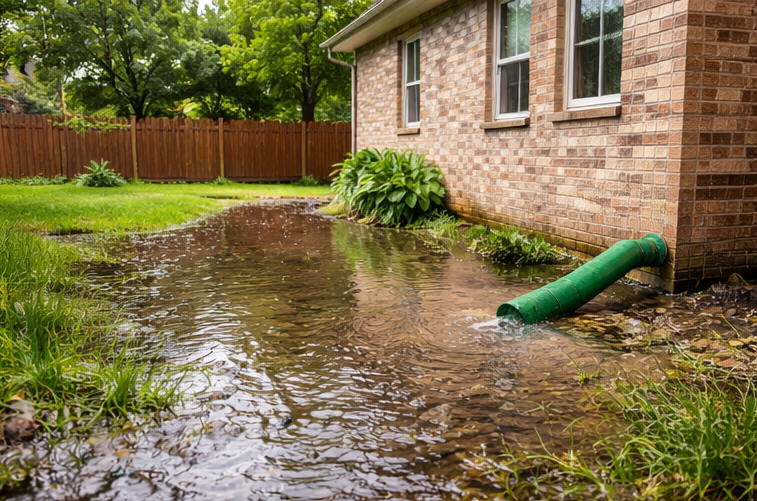
Drainage isn’t a one-size-fits-all project. The cost depends heavily on your property layout, soil type, and the kind of water issue you’re dealing with.
On average, most homeowners in the U.S. spend anywhere between $2,000 and $8,000 for a drainage system installation. But that range can shift quickly depending on complexity.
For example, a simple French drain in a backyard might cost closer to $2,500. But if your property has poor grading or requires excavation near your foundation, costs can climb past $10,000.
Think about your yard for a second. Does water flow naturally away from your home, or does it collect in certain spots That simple observation often determines whether you’ll need a basic solution or something more involved.
Labor also plays a huge role. In areas with higher labor costs like parts of California or the Northeast you might pay significantly more than in the Midwest or South.
Common Types of Drainage Systems and Their Costs
Different problems require different solutions. And each system comes with its own price range.
A French drain is one of the most common options. It’s essentially a gravel-filled trench with a perforated pipe that redirects water away. These typically cost between $20 to $50 per linear foot. It’s a go-to for yards that stay soggy after rain.
Then there’s the channel drain, often installed in driveways or patios. These systems catch surface water and move it away quickly. Costs usually range from $30 to $100 per linear foot, depending on materials.
For more serious issues, especially around your home’s structure, a foundation drainage system might be needed. This is where things get more expensive. Excavation, waterproofing, and pipe installation can push total costs into the $5,000 to $15,000 range.
If you’re already dealing with moisture inside your home, it’s worth looking into how drainage ties into broader solutions like basement waterproofing cost breakdown in the US to avoid overlapping expenses later.
Have you noticed water stains or that musty smell downstairs That’s often where drainage issues start showing up first.
Yard Drainage vs Foundation Drainage What’s the Difference
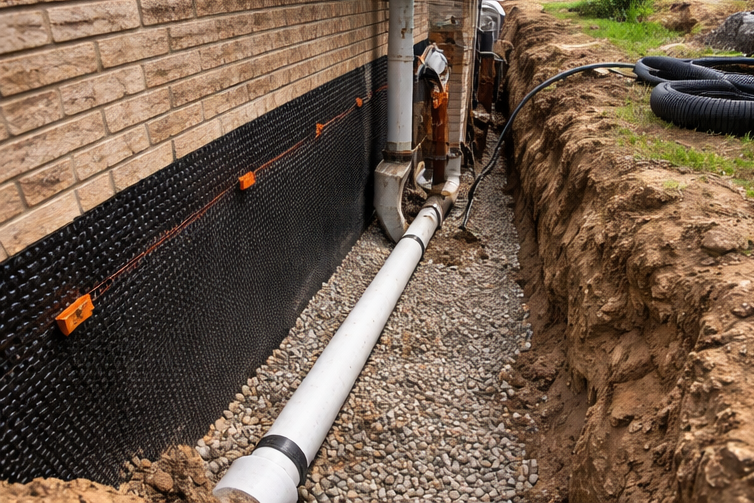
At first glance, it might all seem like the same thing just moving water away. But yard drainage and foundation drainage serve different purposes, and the costs reflect that.
Yard drainage systems are generally simpler. They deal with surface water, like rain pooling in low spots. These systems are less invasive and usually don’t require heavy equipment.
Foundation drainage, on the other hand, is more complex. It often involves digging around your home, installing pipes below ground level, and sometimes adding waterproof barriers. That’s why it costs more.
Here’s where homeowners sometimes make a costly mistake. They fix the yard but ignore what’s happening near the foundation. Over time, water still finds its way to the structure.
If your home has even minor foundation concerns, it’s smart to understand how drainage connects with repairs like those discussed in this foundation repair cost guide by severity. Addressing both together can actually save money in the long run.
Real-Life Cost Scenarios Homeowners Face
Let’s make this more concrete.
Imagine a homeowner in Ohio dealing with a backyard that floods every spring. They install a 100-foot French drain system. At around $35 per foot, that’s roughly $3,500 total. Problem solved without touching the house itself.
Now compare that to a homeowner in New Jersey who notices cracks in their basement walls. Water is seeping in during storms. They need excavation, drainage pipes, and waterproofing. Their project could easily reach $12,000 or more.
Same keyword. Completely different situations.
This is why estimates vary so much online. When you read a number, it only makes sense in context.
Have you ever gotten a quote that felt way higher than expected? Chances are, the contractor was factoring in long-term structural protection, not just surface water control.
Hidden Costs That Catch Homeowners Off Guard
One of the biggest surprises in drainage projects is everything that isn’t included in the initial estimate.
Excavation is a big one. If your yard has hard soil or obstacles like tree roots, costs can rise quickly. The same goes for restoring landscaping after installation. Replacing sod, replanting shrubs, or fixing a walkway can add hundreds or even thousands.
Permits are another factor, depending on your local regulations. Some municipalities require approval for drainage changes, especially if they affect water flow to neighboring properties.
And then there’s maintenance. Drainage systems aren’t completely set it and forget it. Over time, pipes can clog with debris or sediment. Occasional cleaning or inspections may be needed.
This is where it helps to think beyond just installation. If you’re already planning multiple home improvements, it might make sense to look at a broader overview like this complete home repair cost guide in the US to prioritize your budget effectively.
Smart Ways to Reduce Drainage Installation Costs
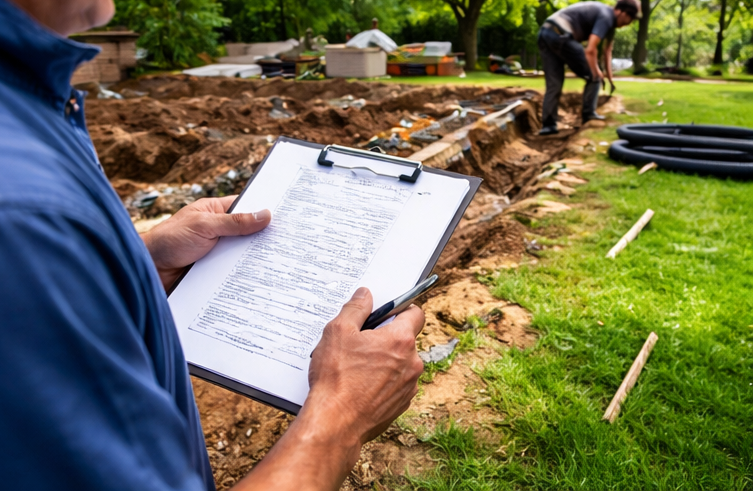
Not every drainage project has to break the bank. There are ways to manage costs without cutting corners.
One approach is addressing grading first. Sometimes, simply reshaping the slope of your yard can reduce water buildup significantly. It’s not always enough, but it can minimize the scope of a full drainage system.
Another option is partial installation. Instead of covering the entire yard, you target only the problem areas. This works well if water pooling is localized.
Timing also matters. Contractors are often busier and more expensive during peak rainy seasons. Scheduling work during drier months can sometimes lead to better pricing.
And then there’s the DIY temptation. While small fixes like extending downspouts are manageable, full drainage systems are usually best left to professionals. A poorly installed system can actually make water problems worse.
Think about it like this: you’re not just moving water you’re controlling how it behaves around your home.
When Is It Actually Worth the Investment
It’s easy to delay drainage work, especially when the issue feels seasonal. But water problems rarely stay the same over time.
What starts as a puddle in the yard can turn into soil erosion. Then maybe foundation settling. Eventually, you’re looking at structural repairs that cost far more than the original drainage system.
On the flip side, a well-installed drainage system protects your property value. It keeps your yard usable, your foundation stable, and your basement dry.
If you’ve ever had to cancel a backyard gathering because the lawn was too soggy or noticed that lingering damp smell indoors you already know how much it affects daily life.
So the real question becomes: are you fixing a short-term annoyance, or preventing a long-term problem?
Because when it comes to drainage system installation cost, what you’re really paying for is peace of mind every time it rains.