buildcostguide.site – Subfloor repair cost in the US explained with real scenarios, pricing breakdowns, and smart ways to avoid expensive structural damage.
You don’t usually think about your subfloor until something feels off. Maybe your kitchen floor starts to sag slightly near the sink. Or you notice a soft spot under the carpet in your living room. At first, it seems minor. Then one day, you step down and feel a subtle dip that wasn’t there before. That’s often when homeowners start searching for the real subfloor repair cost and realize it’s not always a small fix.
In many cases, the issue has been building for months or even years. Water leaks, humidity, or structural stress quietly weaken the subfloor beneath your feet. By the time it’s noticeable, the repair can range from manageable to surprisingly expensive.
So what actually drives the cost? And more importantly, how do you know what kind of repair you’re dealing with
What Impacts Subfloor Repair Cost the Most
Subfloor repair isn’t a one-size-fits-all job. The cost can vary widely depending on what’s happening underneath your flooring.
The biggest factor is usually the cause of damage. Water damage tends to be the most common. A slow leak from a dishwasher or bathroom pipe can soak into plywood over time. At first, it just swells slightly. Eventually, it softens and loses structural integrity. That’s when replacement becomes necessary.
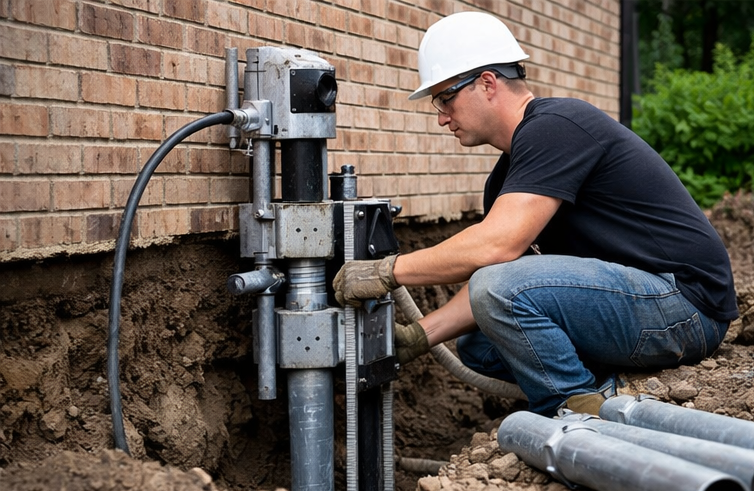
Structural issues are a different story. If the subfloor is sagging due to weakened joists or poor support, repairs often involve more than just replacing wood panels. Contractors may need to reinforce framing or address underlying foundation concerns. That adds both time and cost.
Size also matters. Fixing a small section under a sink is very different from repairing an entire room. A localized repair might cost a few hundred dollars. A full-room subfloor replacement can easily reach several thousand.
This is where many homeowners misjudge the situation. They assume the visible damage reflects the full scope. But once the top flooring is removed, hidden issues often appear. Have you ever pulled up old carpet and found something worse underneath That’s exactly the kind of surprise that drives costs up.
Average Subfloor Repair Cost in the US
In most US homes, the subfloor repair cost falls between $300 and $2,500 for smaller repairs. For larger or structural fixes, it can climb to $3,000–$7,000 or more.
Here’s how it typically breaks down:
Minor repairs small water-damaged area: $300–$800
Moderate repairs partial room replacement: $800–$2,500
Major repairs large areas or structural reinforcement: $2,500–$7,000+
Labor makes up a significant portion of the cost. Removing flooring, cutting out damaged sections, and installing new subflooring is time-intensive. If the contractor also needs to fix joists or deal with mold, the price increases quickly.
Material costs are usually straightforward. Standard plywood or OSB panels are relatively affordable. But moisture-resistant materials or specialty subfloor systems can raise the total.
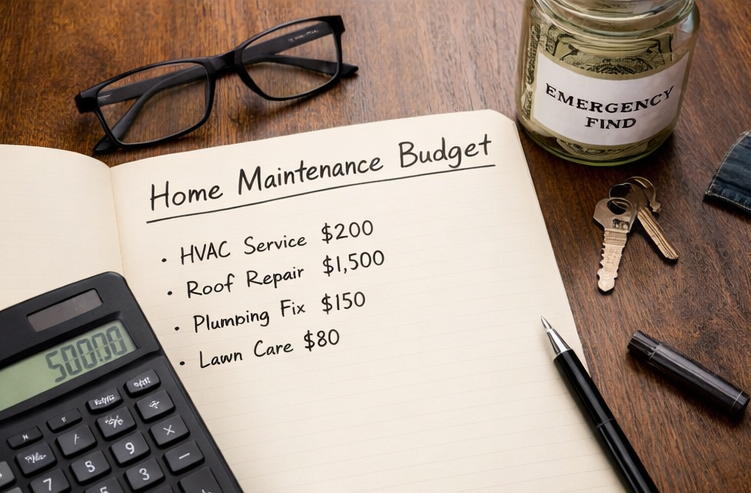
If you’re trying to understand where this fits within your overall home maintenance budget, it helps to look at a broader home repair cost breakdown in the US. Subfloor work often overlaps with other repairs, especially in older homes.
At this point, you might be wondering: is it ever okay to delay the repair
Water Damage The Most Common and Misunderstood Problem
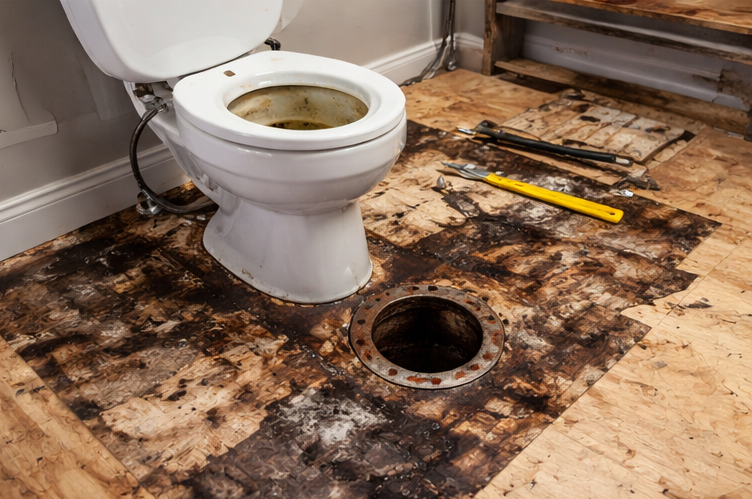
Water damage doesn’t always look dramatic. In fact, the early signs are easy to miss.
A slightly warped floor. A faint musty smell. Maybe a tile that feels loose when you step on it. These small signals often get ignored because they don’t seem urgent.
But over time, moisture weakens the subfloor from the inside. The wood fibers break down. Nails loosen. Eventually, the surface above starts to shift.
One homeowner in Ohio shared that they ignored a soft bathroom floor for nearly a year. It didn’t seem like a big deal. When they finally opened it up, the subfloor had rotted completely around the toilet flange. What could have been a $500 repair turned into a $3,000 project.
That’s the tricky part. Water damage spreads quietly.
On the other hand, not all moisture issues require full replacement. If caught early, drying the area and sealing the source of the leak might be enough. This is where a proper inspection matters. Acting too late increases cost. Acting too early without confirming the issue can also waste money.
So timing plays a bigger role than most people realize.
Structural Issues When the Problem Goes Deeper
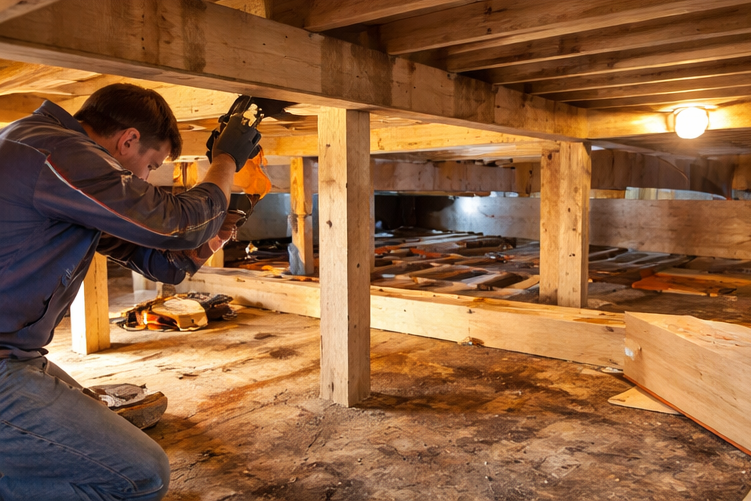
Not every soft or uneven floor is caused by water. Sometimes the issue is structural.
In older homes, subfloors may weaken due to aging materials or shifting foundations. Joists can sag slightly over time. In crawl spaces, poor ventilation can lead to long-term moisture buildup that affects both wood and support beams.
Structural repairs tend to be more complex. Contractors may need to access the area from below, especially in homes with crawl spaces. This often involves removing insulation, reinforcing joists, or installing additional supports.
If your home has a crawl space, it’s worth understanding how related repairs can affect your budget. Issues below the subfloor often overlap with crawl space repair costs and moisture fixes, which can add another layer of expense.
At the same time, not every uneven floor means structural failure. Sometimes it’s just minor settling or installation issues. That’s why a proper assessment is critical before committing to major repairs.
Have you noticed uneven flooring in one specific area, or does it affect multiple rooms That detail alone can point to very different underlying problems.
How Flooring Type Affects Subfloor Repairs
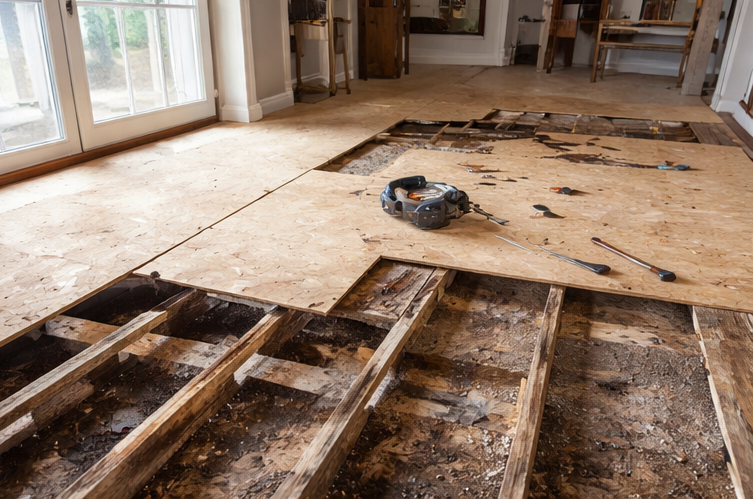
The type of flooring above your subfloor can significantly influence both cost and complexity.
For example, repairing subfloor under tile is usually more expensive. Tile needs to be carefully removed, and matching it afterward can be difficult. Hardwood flooring presents a similar challenge, especially if the boards are older or discontinued.
Carpet and vinyl are generally easier and cheaper to remove and reinstall. That reduces labor time and overall cost.
In many cases, homeowners end up replacing both the subfloor and the flooring at the same time. It’s not always required, but it often makes sense. Trying to reinstall old flooring over a new subfloor can lead to uneven results.
If you’re considering this route, it helps to understand the broader flooring replacement cost across materials. Combining both projects can sometimes save on labor, but it also increases the upfront expense.
This is where planning becomes important. Are you trying to fix a problem quickly, or improve the space long-term
Common Mistakes That Increase Subfloor Repair Cost
A lot of subfloor repairs become more expensive due to avoidable mistakes.
One of the most common is ignoring early warning signs. Small soft spots or minor water damage rarely stay small. Waiting often leads to larger replacement areas and higher labor costs.
Another mistake is focusing only on the surface. Replacing flooring without addressing the subfloor underneath doesn’t solve the problem. In fact, it can make things worse. The new flooring may look fine at first, but the underlying issue will resurface.
DIY repairs can also backfire. While replacing a small section of subfloor might seem manageable, improper installation can lead to uneven surfaces or weak spots. That often results in rework, which costs more than hiring a professional from the start.
At the same time, not every situation requires a full replacement. Some contractors may recommend larger repairs than necessary. Getting a second opinion can help you avoid overpaying.
It really comes down to understanding what you’re dealing with before making a decision.
When Subfloor Repair Is Worth It and When It’s Not
There are situations where repairing the subfloor is clearly the right move. If the damage is localized and the rest of the structure is solid, a targeted repair can restore the area effectively.
But in older homes with widespread issues, patchwork repairs may not be enough. If multiple areas show signs of damage, a larger replacement might actually be more cost-effective in the long run.
This is where many homeowners hesitate. The upfront cost feels high. But repeated small repairs can add up quickly, especially if the root cause isn’t addressed.
Think about how you use the space. A busy kitchen or bathroom sees daily wear and moisture exposure. Investing in a more durable repair may save money over time.
On the other hand, if you’re planning to sell the home soon, a simpler fix might be enough to stabilize the area without overinvesting.
Subfloor issues rarely announce themselves loudly. They start small, almost invisible, then gradually affect how your home feels underfoot. By the time you notice, the cost depends heavily on how long the problem has been there.
Understanding the real drivers behind subfloor repair cost gives you an edge. It helps you act earlier, plan better, and avoid the kind of surprises that turn minor repairs into major expenses.