buildcostguide.site – Solar panel installation cost explained by system size, pricing factors, and ROI so you can estimate savings and make a smart home energy investment.
If you’ve ever opened your electric bill during peak summer and felt that quiet frustration creeping in, you’re not alone. Across the US, homeowners are looking at solar not just as a green upgrade, but as a practical way to control rising energy costs. But the first question almost everyone asks is simple what is the real solar panel installation cost
The answer isn’t one-size-fits-all. It depends on your home, your energy usage, and even where you live. Still, once you understand how pricing works and how long it takes to pay off the numbers start to make a lot more sense.
Let’s break it down in a way that actually reflects real-life decisions homeowners face every day.
What Drives Solar Panel Installation Cost in the US
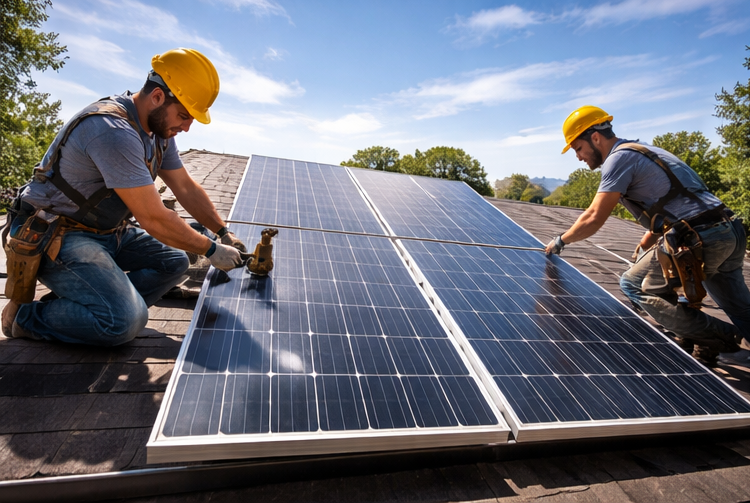
At first glance, solar quotes can feel all over the place. One homeowner gets a $12,000 estimate, another sees $28,000. The gap usually comes down to a few key factors.
System size is the biggest driver. Most residential systems in the US fall between 5 kW and 10 kW. A smaller system might cover basic usage, while a larger one can offset nearly all of your electric bill. Naturally, bigger systems cost more upfront but they also generate more savings over time.
Then there’s location. States like California, Texas, and Florida tend to have more competitive pricing due to higher demand and installer availability. But incentives vary too, which can significantly change your final cost.
And don’t forget your roof. If it’s older or needs repairs, installation may get delayed or bundled with additional work. In many cases, homeowners realize they need to budget for updates after reading about roof replacement cost factors, especially if their roof is nearing the end of its lifespan.
Have you ever noticed how home upgrades rarely happen in isolation? Solar is often part of a bigger picture.
Average Cost by System Size Realistic US Pricing

Let’s get into actual numbers. As of recent estimates, the average solar panel installation cost in the US ranges between $2.50 and $3.50 per watt before incentives.
Here’s what that looks like in practice:
5 kW system: $12,500 – $17,500
7 kW system: $17,500 – $24,500
10 kW system: $25,000 – $35,000
Now, most homeowners don’t pay the full sticker price. The federal solar tax credit (ITC) currently allows you to deduct 30% of installation costs, which can bring a $20,000 system down to around $14,000.
Still, that’s not pocket change. And this is where many people pause and ask themselves: Is it actually worth it
Interestingly, homeowners who’ve already tackled bigger upgrades like following a complete home repair cost guide tend to view solar differently. It shifts from expense to long-term investment.
Hidden Costs Most Homeowners Don’t Expect
Here’s where things get real. The base installation price is only part of the story.
In some homes, especially older ones, your electrical system might not be ready for solar. That can mean upgrading your panel to handle the additional load. If you’ve never looked into it before, reviewing the electrical panel upgrade cost breakdown can give you a clearer idea of what to expect.
Then there’s wiring. While not always required, some older homes need updates to safely integrate solar. That’s where understanding whole house rewiring costs becomes relevant.
A common scenario goes like this: someone plans for a $15,000 solar install, then realizes they need an extra $3,000–$8,000 in electrical upgrades. It’s not a dealbreaker but it changes the timeline and budgeting.
Have you ever started a simple home project that turned into something bigger Solar can follow that same pattern if you’re not prepared.
How Long It Takes to Break Even (ROI Explained)
This is the part that matters most for many homeowners how long until the system pays for itself
On average, the payback period in the US ranges from 6 to 10 years. But that timeline depends on a few variables:
Electricity rates play a huge role. If you live in a state with high energy costs, your savings add up faster. In places like California or New York, homeowners often see quicker returns compared to areas with cheaper electricity.
Sunlight exposure matters too. Homes in sunnier regions generate more power, which means higher savings over time.
Then there’s your usage habits. A household running AC most of the year will benefit more than a low-energy household.
Picture this: two neighbors install identical systems. One works from home, runs multiple devices, and uses AC daily. The other travels frequently and keeps energy use minimal. Same system, very different ROI timelines.
This is where solar becomes less about averages and more about your lifestyle.
Monthly Savings vs Upfront Cost What It Feels Like in Real Life
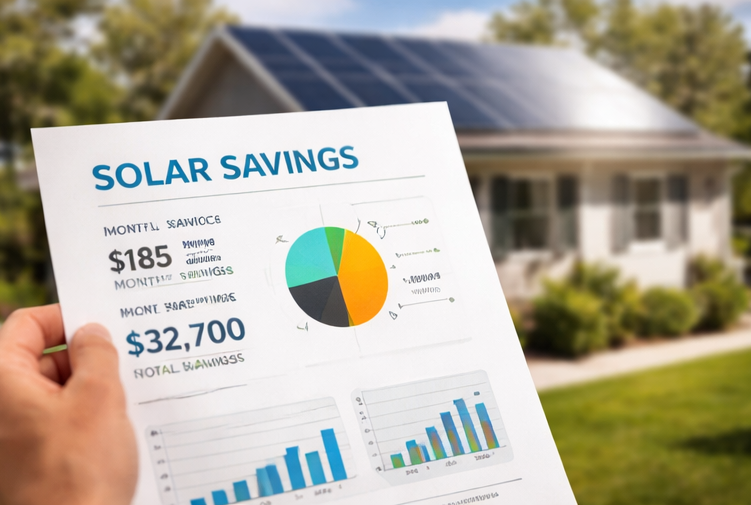
Let’s bring this down to everyday terms.
Instead of focusing only on total cost, many homeowners think in monthly impact. If your solar system reduces a $200 electric bill to $30, that’s $170 saved every month.
Over a year, that’s over $2,000. Over 10 years, it adds up fast.
Now compare that to financing options. Many solar loans allow you to install with little to no upfront cost, replacing your electric bill with a fixed monthly payment.
Some homeowners describe it like this:
It stopped feeling like a bill and started feeling like an investment.
Of course, financing means paying interest, so total cost increases slightly. But for many, the predictability is worth it especially when utility rates keep rising.
Have you noticed how unpredictable energy bills can be lately That’s one of the biggest reasons solar adoption keeps growing.
When Solar Makes the Most Financial Sense
Solar isn’t the right move for every home but in certain situations, it becomes a very smart decision.
It tends to make the most sense if:
You plan to stay in your home for at least 5–10 years
Your electricity bills are consistently high
Your roof is in good condition or recently replaced
Your home gets good sunlight exposure
On the other hand, if you’re planning to move soon, the ROI might not fully play out unless it adds resale value which varies by market.
There’s also a timing factor. Many homeowners choose to install solar right after completing major upgrades. For example, after replacing a roof or upgrading electrical systems, it feels like the right moment to move forward.
Think about it once your home systems are updated, adding solar becomes smoother and often more cost-efficient.
At the end of the day, solar panel installation cost isn’t just about the number on a quote. It’s about how that number fits into your daily life, your long-term plans, and how you want to manage energy costs moving forward.
And for many homeowners across the US, that shift from paying utilities to producing your own energy starts to feel less like a luxury and more like a practical next step.