buildcostguide.site – A full roof replacement is one of the most expensive and unavoidable investments a homeowner will ever face. Ignore the warning signs too long, and what starts as a minor issue can quickly turn into thousands of dollars in structural damage.
If you’ve recently noticed curling shingles, persistent leaks, or storm damage, your first question is probably direct: What is the roof replacement cost going to look like in my situation
In the United States, roof replacement costs vary widely depending on materials, labor, home size, and location. While national averages provide a starting point, the final number often reflects a combination of structural realities and regional market conditions.
This article focuses specifically on understanding roof replacement cost in the U.S. what drives it, how pricing is structured, and what homeowners should evaluate before making a decision
Understanding the Average Roof Replacement Cost in the United States
Across the United States, the average roof replacement cost for a typical single-family home generally falls between $8,000 and $20,000. Most homeowners report paying somewhere around $11,000 to $15,000 for standard asphalt shingle replacements on homes between 1,500 and 2,500 square feet.
However, these numbers can shift significantly based on:
Roofing material
Roof size and pitch
Local labor rates
Removal of old roofing layers
Structural repairs underneath
Permits and inspection requirements
For example, replacing architectural asphalt shingles on a 2,000-square-foot roof in Texas may cost substantially less than installing metal roofing on a similarly sized home in California, where labor and compliance costs tend to be higher.
Online marketplaces such as Angi and HomeAdvisor publish national averages, but these figures reflect aggregated data and should be treated as broad estimates rather than precise quotes.
The key takeaway: roof replacement cost is highly project-specific.
Major Factors That Influence Roof Replacement Cost
While square footage is important, it’s rarely the only driver of price. Several structural and logistical variables play a role in determining final costs.
Roofing Material Type

Material selection is one of the largest cost differentiators.
Asphalt shingles remain the most common roofing material in the U.S. due to affordability and relatively straightforward installation. They typically cost:
$4 to $7 per square foot installed
Metal roofing ranges from:
$8 to $16 per square foot installed
Tile or slate roofing can exceed:
$15 to $30 per square foot installed
Premium materials increase both material and labor costs due to specialized installation requirements.
Roof Size and Complexity
Roofers measure in squares, where one square equals 100 square feet. A 2,000-square-foot roof equals 20 squares.
However, complexity matters just as much as size. Features that increase labor time include:
Multiple slopes and valleys
Dormers
Skylights
Chimneys
Steep pitch
A simple gable roof costs less to replace than a complex multi-angle design, even if the total square footage is the same.
Tear-Off vs. Overlay
If your existing roof already has multiple layers of shingles, building codes in many states require a full tear-off before installing new materials.
Removing old roofing typically adds:
$1,000 to $3,000 (depending on size and disposal fees)
Landfill costs and local waste regulations can affect this portion of roof replacement cost.
Structural Repairs
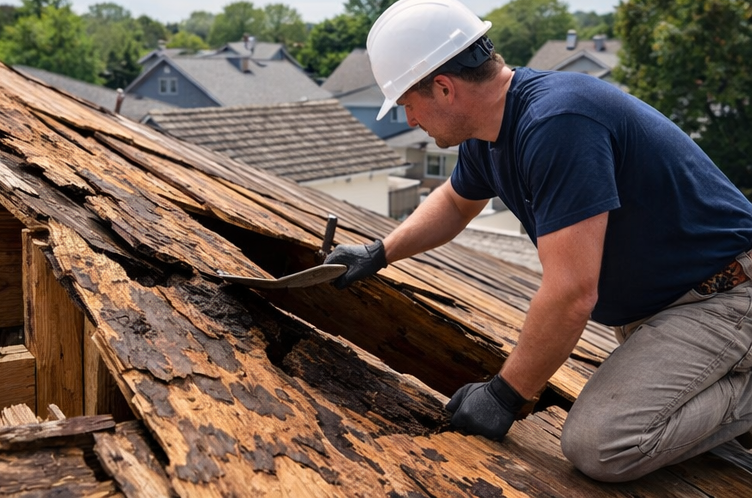
Sometimes the most expensive discoveries happen after shingles are removed.
Water damage may have compromised:
Roof decking (plywood or OSB)
Flashing
Underlayment
Structural framing
If decking needs replacement, expect additional charges per sheet, often $70–$100 per board including labor.
Regional Price Differences Across the US
Roof replacement cost is not uniform nationwide.
Labor rates differ dramatically depending on region, local building codes, and insurance environments.
High-Cost Areas
States like:
California
New York
Massachusetts
often see higher labor rates due to:
Cost of living
Stricter code compliance
Permit requirements
Storm-Prone Regions
In hurricane-prone states such as Florida, building codes may require:
Impact-resistant shingles
Enhanced fastening systems
Secondary water barriers
After major weather events, demand spikes can temporarily raise labor and material pricing.
For disaster-impacted areas, agencies such as Federal Emergency Management Agency (FEMA) may provide guidance or recovery support, though not all roofing projects qualify for assistance.
Midwest and Southern States
In parts of the Midwest and South, labor tends to be more moderate. However, hail damage and seasonal storms often influence replacement timing and insurance involvement.
Regional factors make it important to obtain multiple local quotes rather than relying solely on national averages.
Insurance and Roof Replacement Cost

One of the biggest financial variables is whether the roof replacement is:
Insurance-covered (due to storm damage)
Out-of-pocket (due to age or wear)
Insurance-Covered Replacements
Homeowners insurance may cover roof replacement if damage results from:
Hail
Windstorms
Fallen trees
Fire
However, coverage depends on:
Policy type (Actual Cash Value vs. Replacement Cost Value)
Deductible
Roof age
An older roof may receive partial reimbursement due to depreciation.
Age-Related Replacement
If the roof has simply reached the end of its lifespan, insurance generally does not cover replacement.
In that case, homeowners must plan for the full roof replacement cost themselves.
For broader budgeting context, many homeowners review comprehensive cost breakdowns such as this guide on Home Repair and Replacement Costs in the US: Complete Pricing Guide to understand how roofing fits into larger property maintenance planning.
Financing and Payment Considerations
Because roof replacement cost can exceed $10,000, many homeowners explore financing options.
Common approaches include:
Home equity loans
Home equity lines of credit (HELOCs)
Contractor financing plans
Personal loans
Interest rates vary depending on credit profile and lender. Contractor-offered financing sometimes includes promotional periods but should be reviewed carefully for long-term terms.
In certain cases, roof replacements that improve energy efficiency such as installing reflective or solar-integrated roofing may qualify for federal incentives. Homeowners can review current guidance from the Internal Revenue Service (IRS) to determine eligibility for energy-related tax credits.
Financing decisions should consider:
Total interest paid over time
Loan term length
Impact on monthly budget
Future resale plans
Timing and Market Conditions
Roof replacement cost can fluctuate depending on season and material supply conditions.
Seasonal Demand
Late summer and early fall tend to be peak roofing seasons in many parts of the country. During high-demand periods:
Contractor availability decreases
Scheduling delays increase
Pricing may rise modestly
Winter installations are possible in many states but may be limited by weather conditions.
Material Supply Chain
Over the past several years, roofing materials particularly asphalt shingles and lumber have experienced pricing volatility due to:
Supply chain disruptions
Fuel cost increases
Tariff changes
Material cost swings can add several thousand dollars to a large project.
Because of this variability, estimates are often valid for only 15–30 days.
Practical Cost Breakdown Example
To better understand how roof replacement cost adds up, consider a 2,000-square-foot home with a moderately pitched roof.
Example Scenario: Architectural Asphalt Shingles
Materials: $6,000
Labor: $4,500
Tear-off and disposal: $1,800
Permits and inspections: $300
Minor decking repair: $700
Estimated total: $13,300
Change the material to standing seam metal roofing, and the same project could exceed $22,000 depending on region.
This illustrates how material choice and structural conditions significantly affect total cost.
Long-Term Financial Implications
While the upfront roof replacement cost can feel substantial, the decision has long-term financial implications.
Property Value
A new roof can improve:
Curb appeal
Buyer confidence
Inspection outcomes during resale
In competitive housing markets, a recently replaced roof may help prevent price reductions during negotiations.
Insurance Premiums
In some states, installing impact-resistant shingles can reduce homeowners insurance premiums. However, savings vary by insurer and region.
Energy Efficiency
Modern roofing materials with reflective properties can help reduce attic heat buildup, potentially lowering cooling costs in warmer climates.
The long-term value of a roof replacement often depends on:
Length of time you plan to stay in the home
Quality of materials selected
Proper installation
Important Considerations Before Moving Forward
Before committing to a roof replacement project, homeowners should evaluate several factors carefully.
Get Multiple Written Estimates
At least three detailed quotes help clarify:
Scope of work
Warranty terms
Cleanup procedures
Timeline expectations
A lower quote may reflect differences in materials or workmanship warranty length.
Review Warranties
Roof warranties generally include:
Manufacturer material warranty
Contractor workmanship warranty
These are separate protections. Workmanship coverage can vary widely between companies.
Verify Licensing and Insurance
Roofing contractors should carry:
General liability insurance
Workers’ compensation coverage
State requirements differ, but documentation should be available upon request.
Understand Permit Requirements
Many municipalities require permits for roof replacement. Skipping this step can create complications during resale.
Digging Deeper: Replacement vs. Repair Decisions
Some homeowners hesitate between repairing isolated damage and replacing the entire roof.
Factors that may justify full replacement include:
Roof age nearing end of lifespan (20–30 years for asphalt)
Widespread shingle deterioration
Recurring leaks
Structural decking damage
If more than 25–30% of the roof requires repair, a full replacement may be more cost-effective over time.
However, if damage is localized and the roof is relatively new, repair may extend usable life at a fraction of full roof replacement cost.
An experienced roofing inspector can provide a condition assessment to guide this decision.
Roof replacement cost in the United States is shaped by material choice, structural complexity, regional labor markets, and insurance factors. Understanding how these elements interact allows homeowners to approach estimates with clarity rather than uncertainty.
By evaluating materials, financing options, and long-term property goals, homeowners can make informed decisions that align with both budget realities and future plans.