buildcostguide.site – Patio installation cost in the US explained compare concrete, paver, and stone pricing, real-life factors, and how to budget smartly.
Stepping into your backyard should feel like an upgrade, not a construction regret. But for many homeowners in the US, the moment they start pricing a patio, the numbers feel all over the place. One quote says $3,000. Another jumps to $15,000. Same yard. Same idea. So what’s actually going on with patio installation cost?
The truth is, patio pricing isn’t just about square footage. Materials, labor, layout complexity, and even how your yard drains can shift the final number more than most people expect. That’s where things get confusing and where costly mistakes often start.
Let’s break it down in a way that actually reflects how patios are planned and built in real American homes.
What Drives Patio Installation Cost in Real Life
At first glance, most homeowners assume patio cost is just price per square foot. That’s partly true, but it leaves out the details that quietly add thousands to your project.
Labor is one of the biggest variables. In suburban areas, a straightforward install might stay affordable. In cities or regions with high demand, labor alone can double your estimate. And then there’s site prep something people often overlook until contractors bring it up.
If your yard isn’t level, expect excavation costs. If water tends to pool after rain, drainage work becomes necessary. These aren’t optional upgrades. They’re structural fixes that determine whether your patio lasts five years or twenty.
Think about a typical scenario: a homeowner in Ohio installs a concrete patio without addressing slope issues. It looks great for the first year. By year three, cracks appear, and water starts sitting near the foundation. That’s where skipping prep turns into long-term repair costs.
So when you see a cheap quote, it’s worth asking what’s not included
Concrete Patio Costs The Budget-Friendly Starting Point
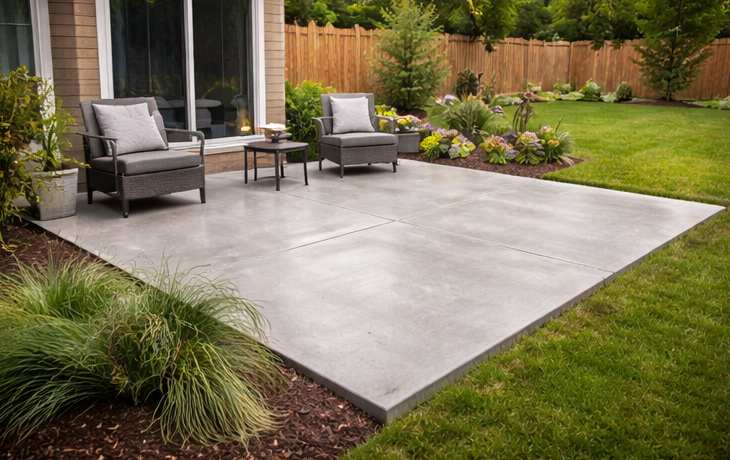
Concrete is usually the entry-level option for patios in the US. It’s widely available, relatively quick to install, and works well for simple layouts.
On average, concrete patio installation cost ranges from $6 to $12 per square foot. Basic poured concrete sits on the lower end. Decorative finishes like stamping or staining push it higher.
For many homeowners, concrete feels like the safe choice. It’s clean, modern, and low maintenance at first. But over time, small issues start to show. Hairline cracks are common, especially in areas with freeze-thaw cycles.
This is where expectations matter. Concrete doesn’t fail overnight. It gradually changes. You might notice discoloration, minor shifting, or uneven spots after a few seasons.
There’s also a lifestyle factor. If you host often or use outdoor furniture heavily, concrete can feel hard and unforgiving. It’s not always the most comfortable surface for long evenings outside.
Still, for homeowners who want a simple patio without stretching the budget, concrete remains a practical starting point.
If you’re already comparing outdoor surfaces, you might find it helpful to see how costs differ in other projects like a concrete driveway replacement cost breakdown, since similar factors apply.
Paver Patio Costs Flexibility Comes at a Price
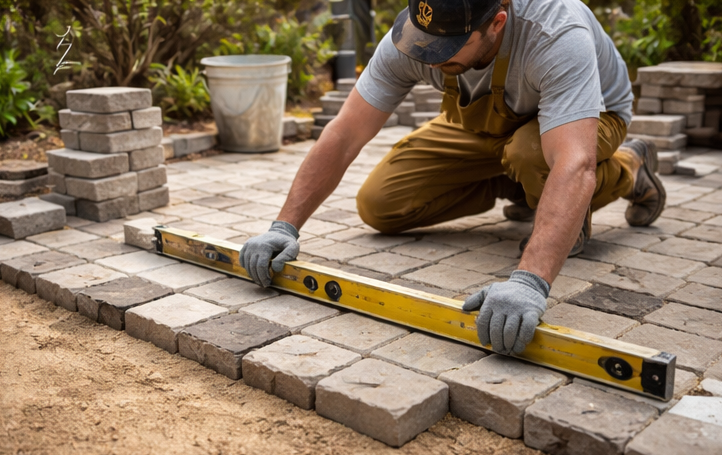
Pavers sit in the middle ground between affordability and design flexibility. They’re one of the most popular choices in the US for a reason.
Typical paver patio installation cost falls between $10 and $25 per square foot. The range depends on the type of paver, pattern complexity, and base preparation.
What makes pavers appealing is how adaptable they are. You can create patterns, mix colors, and match your home’s style more closely than with concrete. And if something shifts or cracks, individual pieces can be replaced without tearing up the entire patio.
But here’s where reality sets in. Installation is labor-intensive. Each paver must be placed, leveled, and compacted properly. Cutting corners during installation often leads to uneven surfaces or weeds growing between joints.
Imagine walking across your patio barefoot and feeling slight dips underfoot. That’s usually not a material issue it’s an installation problem.
Maintenance is another factor. Over time, sand between pavers may need refilling. Weeds can show up if sealing isn’t done correctly.
So while pavers offer flexibility, they also require more attention to detail both during and after installation.
Natural Stone Patio Costs: Premium Look, Higher Investment
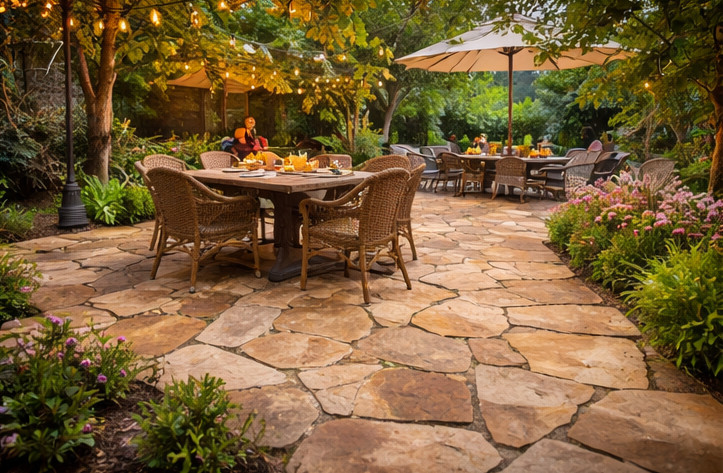
Natural stone patios are often seen as the dream upgrade. They bring a high-end, organic look that’s hard to replicate with other materials.
Pricing reflects that. Stone patio installation cost typically ranges from $20 to $40+ per square foot, depending on the type of stone and complexity of the layout.
Flagstone, bluestone, and slate are common choices in the US. Each has its own texture and color variation. That variation is part of the appeal but it also makes installation more complex.
Unlike uniform pavers, natural stone pieces don’t fit perfectly together. Installers need to shape and position each piece carefully. That increases labor time significantly.
There’s also a misconception that stone is maintenance-free. While it’s durable, it’s not immune to issues. Some stones are porous and may stain if not sealed properly. Others can become slippery in wet conditions.
Picture a backyard dinner setup on a stone patio. It looks stunning, especially at sunset. But if the surface wasn’t sealed, spills from drinks or food can leave marks that are hard to remove.
Stone is ideal for homeowners who prioritize aesthetics and are willing to invest more upfront. It’s less about saving money and more about creating a space that feels custom.
Hidden Costs Most Homeowners Miss
This is where patio installation cost often surprises people. The base estimate rarely tells the full story.
Permits can add a few hundred dollars, depending on your city. It’s easy to overlook, but skipping permits can create problems if you sell your home later.
Then there’s furniture and usability. A patio without proper seating, shade, or lighting often ends up underused. Many homeowners install the surface but delay the rest, only to realize the space feels incomplete.
Drainage is another big one. Water management isn’t visible when the project is done, but it affects everything. Poor drainage can damage both the patio and your home’s foundation over time.
Also consider demolition. If you’re replacing an existing structure, removal costs can add $1,000 or more. This is similar to what homeowners experience when comparing projects like deck repair and replacement cost in the US, where teardown plays a big role.
Have you thought about how your patio connects to the rest of your yard? That transition steps, walkways, or edging often gets priced separately.
When Paying More Actually Saves You Money
It’s tempting to choose the lowest quote. In some cases, that works. In many cases, it leads to rework within a few years.
Higher-quality installation often includes better base preparation. That means proper grading, compacted layers, and attention to drainage. These steps aren’t flashy, but they’re what keep your patio stable over time.
There’s also material quality. Lower-cost materials may look fine initially, but fade or wear faster. Replacing or repairing them adds cost down the line.
Think of it like this: spending an extra $2,000 now might prevent a $6,000 repair later. It’s not just about the patio—it’s about avoiding disruption, stress, and repeat construction.
At the same time, spending more doesn’t always mean better. Some upgrades are purely aesthetic and don’t add durability. The key is knowing where the money actually makes a difference.
If you’re planning multiple home upgrades, it helps to understand how these costs fit into the bigger picture. A broader guide like home repair and replacement costs in the US can give you a more realistic budget perspective.
Choosing the Right Patio for Your Lifestyle
Not every patio needs to be high-end. Not every budget solution is a compromise. The right choice depends on how you actually use your space.
If your backyard is mostly for occasional gatherings, a simple concrete patio might be enough. It gets the job done without overcomplicating things.
If you enjoy hosting or want a more personalized look, pavers offer flexibility without going fully premium.
And if your outdoor space is a focal point something you use daily natural stone can transform how the entire area feels.
Try to picture a typical evening. Are you grilling, hosting friends, or just sitting outside after work The answer often points you toward the right material more clearly than any price chart.
Because in the end, patio installation cost isn’t just about numbers. It’s about how the space fits into your life and whether it actually gets used the way you imagined.