buildcostguide.site – If your lights flicker when the HVAC kicks on, your breaker trips during normal use, or your home still runs on a 100-amp panel, you may be wondering about the real electrical panel upgrade cost in the United States. For many homeowners, the uncertainty isn’t just about price it’s about what drives that price and whether the upgrade is truly necessary.
This article focuses specifically on how upgrade costs vary based on amperage and home size. Rather than covering general electrical repair pricing, we’ll look closely at how panel capacity and square footage influence labor, materials, permitting, and total investment.
Why Amperage Matters More Than Most Homeowners Realize
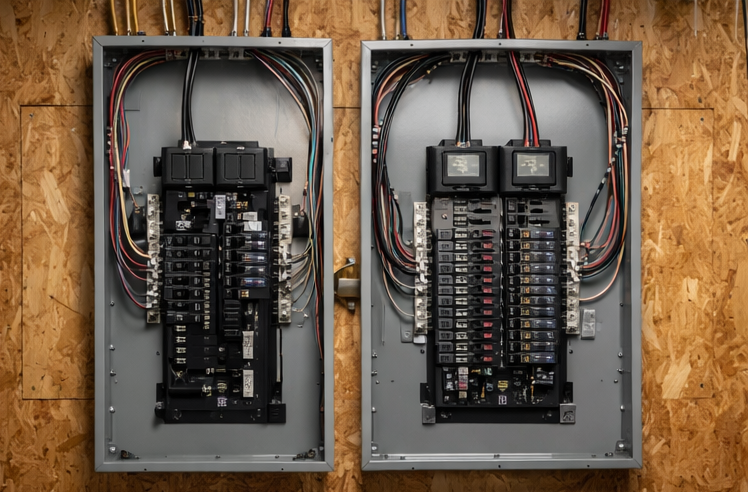
Your electrical panel distributes power throughout your home. The amperage rating commonly 100, 150, 200, or 400 amps determines how much electrical load your system can handle safely.
In older U.S. homes built before the 1990s, 100-amp service was common. Today, many households require 200 amps to support:
Central air conditioning
Electric ranges and dryers
EV chargers
Tankless water heaters
Home offices with multiple devices
If your cooling system is aging or underperforming, reviewing current HVAC repair cost estimates can help determine whether electrical strain is tied to equipment inefficiency.
When demand exceeds panel capacity, circuit breakers trip more frequently. In more serious cases, undersized panels can overheat or create fire risks. Insurance carriers may also require upgrades if the panel is outdated or tied to discontinued brands.
Upgrading isn’t always about adding more circuits it’s about aligning your electrical infrastructure with modern load requirements.
Average Electrical Panel Upgrade Cost by Amperage
Across the United States, the cost to upgrade an electrical panel typically ranges between:
$1,500 to $3,000 for a 100-amp to 200-amp upgrade
$3,000 to $5,000+ for 200-amp to 400-amp service
$1,200 to $2,500 for replacing a panel without increasing amperage
These are national averages. Actual pricing varies by region, labor rates, permit requirements, and utility company policies.
100-Amp to 200-Amp Upgrade
This is the most common residential upgrade.
Typical cost: $1,500–$3,000
What’s included:
New 200-amp panel
Breakers
Labor
Permit and inspection
Utility coordination for temporary disconnect
In some areas, the utility company may also need to upgrade the service line or meter base, which can add several hundred dollars.
200-Amp to 400-Amp Upgrade
Typical cost: $3,000–$5,000 or more
This is usually required for:
Large homes over 3,500 square feet
Homes with multiple HVAC systems
In larger properties, upgrading panel capacity often coincides with evaluating AC replacement cost projections, especially when installing higher-efficiency systems.
Properties adding high-load equipment (EV chargers, workshops, pools)
A 400-amp upgrade often involves installing two 200-amp panels or a larger integrated system. Utility upgrades are more likely in this scenario, increasing complexity.
How Home Size Influences Electrical Panel Upgrade Cost
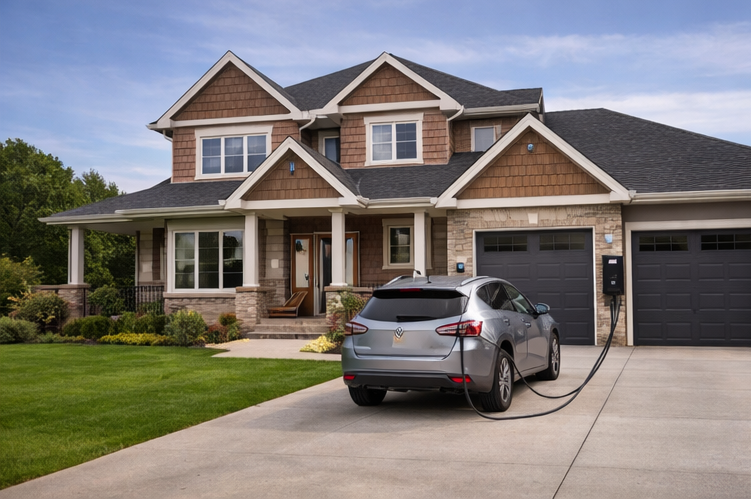
Amperage and home size are closely connected, but square footage affects cost in several additional ways.
Homes Under 1,500 Square Feet
Smaller homes often function adequately on 100 or 150 amps unless significant upgrades are planned.
Upgrade costs in smaller homes may remain near the lower end of the national range because:
Shorter wiring runs
Easier panel access
Fewer circuits to reconnect
Estimated range: $1,200–$2,500
Homes Between 1,500 and 3,000 Square Feet
This is the most common size category in suburban areas.
Most homes in this range benefit from a 200-amp panel, especially if built before 2000. Electrical panel upgrade cost here typically falls between:
$1,800–$3,500
Costs increase if:
The panel is located in a finished basement
Drywall removal is required
The grounding system needs updating
Homes Over 3,000 Square Feet
Larger homes typically require 200 or 400 amps depending on load calculations.
Estimated range: $3,000–$6,000+
Higher costs stem from:
Multiple subpanels
Longer cable runs
Higher labor time
Service entrance upgrades
Home size impacts not only amperage but also installation complexity.
Additional Factors That Affect Upgrade Costs
While amperage and square footage are major cost drivers, other variables influence final pricing.
Permit and Inspection Fees
Most municipalities in the U.S. require:
Electrical permit
Inspection approval
Utility disconnect and reconnect coordination
Permit fees range from $100 to $500, depending on the city or county.
Panel Location
If the existing panel:
Is hard to access
Is embedded behind finished walls
Needs relocation for code compliance
Labor costs increase.
Relocating a panel can add $500 to $2,000 depending on wall repair and rewiring needs.
Code Updates
Electrical codes evolve over time. During an upgrade, contractors may need to:
Install arc fault or ground fault breakers
Update grounding rods
Replace outdated meter bases
These updates are required for safety and compliance, and they add to overall project cost.
Financial and Practical Implications of Upgrading
An electrical panel upgrade is rarely cosmetic. It supports broader home functionality and future improvements.
From a financial standpoint, the investment often aligns with larger renovation plans. For example:
Installing an EV charger without adequate amperage can require immediate panel expansion.
Finishing a basement typically increases electrical load.
Adding a hot tub or pool system requires dedicated circuits.
Panel upgrades can also improve resale appeal. Buyers increasingly look for homes equipped to handle modern electrical demands.
For homeowners evaluating broader renovation budgets, it helps to compare panel costs alongside other major repairs. A broader overview is available in this comprehensive breakdown of home repair and replacement costs in the US, which places electrical upgrades in context with roofing, HVAC, plumbing, and structural expenses.
Common Upgrade Scenarios and Cost Expectations
Understanding specific situations helps clarify when costs rise above average.
Scenario 1: Replacing a Federal Pacific or Zinsco Panel
Certain older panels are widely considered outdated due to safety concerns. Insurance companies may require replacement.
Cost range: $1,500–$3,000
Even without amperage changes, replacement improves safety and insurability.
Scenario 2: Preparing for an Electric Vehicle Charger
Level 2 EV chargers typically require a 240-volt dedicated circuit.
If your panel lacks capacity, upgrading to 200 amps may cost:
$2,000–$3,500, depending on infrastructure.
In some regions, utility rebates may offset a portion of electrical upgrade expenses when tied to EV installations.
Scenario 3: Converting From Gas to Electric Appliances
Switching to electric:
Range
Dryer
Water heater where reviewing water heater replacement cost breakdowns becomes important when converting from gas to electric systems.
Can significantly increase load requirements.
A service upgrade in this case may cost $2,500–$4,000, especially if multiple new circuits are added.
Things to Consider Before Moving Forward
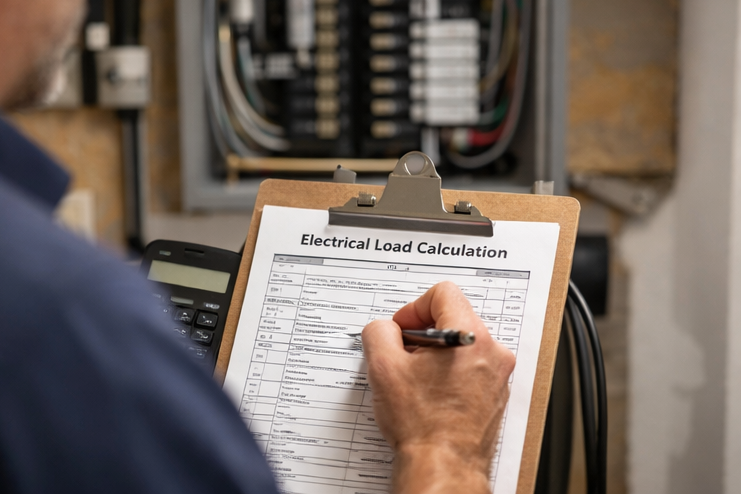
Before committing to an upgrade, homeowners should evaluate several practical considerations.
Load Calculation First
A licensed electrician should perform a formal load calculation. Some homes operate efficiently on 150 amps and may not need a full 200-amp upgrade.
Avoid assuming a larger panel is automatically necessary.
Future Plans
If you’re planning:
Solar panel installation
Home additions
Workshop equipment
Electric heating systems
It may be cost-effective to upgrade capacity once rather than in phases.
Utility Company Requirements
In some service areas, the utility company may require:
Service mast upgrades
Underground line replacement
Meter relocation
These requirements can influence budget and timeline.
Insurance and Inspection Compliance
Upgrading improves safety, but work must be permitted and inspected. Unpermitted electrical work can complicate future home sales or insurance claims.
Long-Term Value and Risk Reduction
An upgraded electrical panel supports system reliability and reduces operational strain.
Benefits include:
Fewer breaker trips
Better distribution of power
Increased appliance compatibility
Reduced fire risk from overloaded circuits Homeowners focused on long-term efficiency may also explore attic insulation cost options, especially when aiming to reduce HVAC load and overall energy consumption.
While the upfront cost may seem substantial, panel upgrades often last decades when properly installed.
In higher-cost metro areas, labor rates may increase overall project pricing, but the structural benefit remains the same: a safer and more adaptable electrical system.
When Electrical Panel Upgrade Cost Is Higher Than Expected
Some projects exceed the typical range due to hidden complications.
Examples include:
Corroded service cables
Aluminum branch wiring updates
Structural modifications required for panel access
Upgrading from fuse box systems
If the home still uses a fuse box, conversion to a breaker panel may cost $2,000–$4,000.
Older homes may also require grounding modernization, which adds labor and materials.
A Focused Perspective on Budget Planning
When evaluating electrical panel upgrade cost, the most important variables are:
-
Required amperage
-
Home size and wiring complexity
-
Local labor rates
-
Code compliance requirements
For most mid-sized American homes upgrading to 200 amps, a realistic planning range is $2,000 to $3,500.
Larger properties or service expansions beyond 200 amps can move total investment closer to $4,000 to $6,000.
Because panel upgrades often occur alongside other improvements, planning them strategically can reduce duplicate labor and inspection fees.
Electrical infrastructure is foundational. While it may not be visible like a kitchen remodel or new flooring, it supports nearly every modern convenience inside the home. Understanding how amperage and home size affect cost helps homeowners budget more accurately and avoid unexpected electrical limitations down the road.