buildcostguide.site – Understand drywall repair cost in the US, from small patch fixes to full wall replacement, with realistic pricing and when each option makes sense.
You notice a dent in the wall after moving furniture. It looks minor, maybe a quick fix. Then you get a quote that feels oddly high for something so small. That moment is where most homeowners realize drywall repair cost is not as straightforward as it seems.
What looks like a simple cosmetic issue can quickly turn into a decision between patching and full replacement. The difference is not just price. It affects durability, appearance, and even resale value. Understanding when each option makes sense is where most people get it wrong.
What Drives Drywall Repair Cost in Real Scenarios
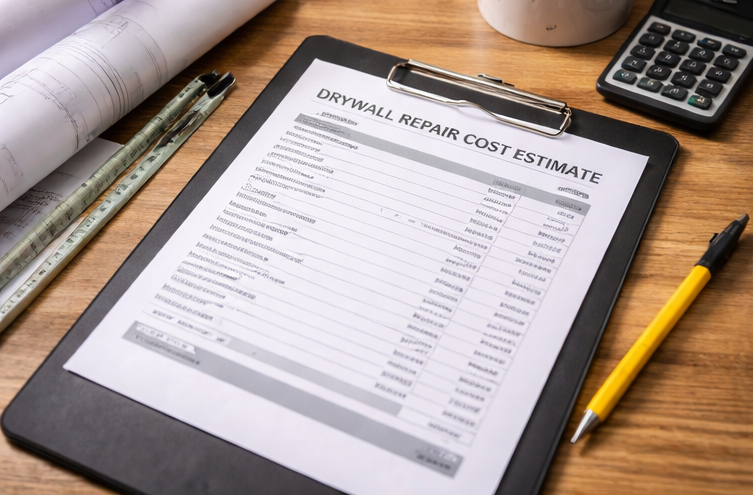
Drywall repair cost is rarely about the size of the hole alone. Two identical holes can cost very different amounts depending on where they are and what caused them.
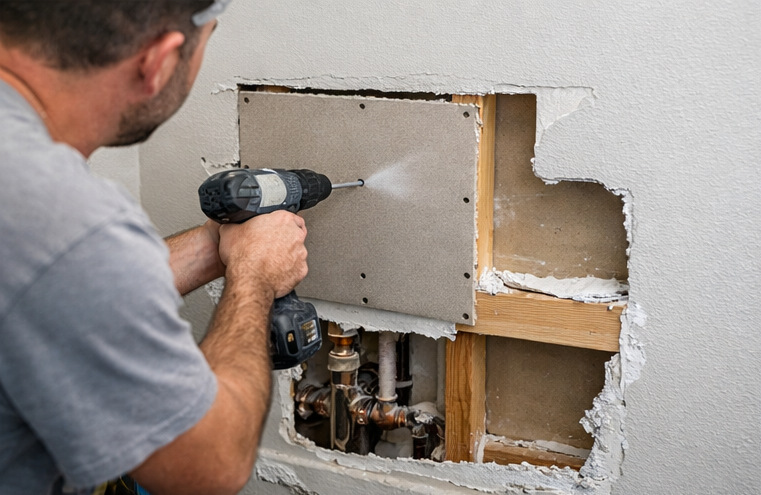
For example, a fist-sized hole in a bedroom wall is a routine patch job. But the same hole near an electrical outlet or along a seam line may require more labor. Contractors need to cut a cleaner section, reinforce edges, and blend textures more carefully.
Labor is often the biggest factor. A contractor might charge a minimum service fee just to show up. This is why small repairs can feel disproportionately expensive. A $20 issue becomes a $150 to $300 job because of time, travel, and setup.
Material costs are usually minimal. Drywall sheets, joint compound, and tape are inexpensive. What you are really paying for is skill. Matching texture and paint so the repair disappears is not trivial, especially in older homes.
Many homeowners underestimate how visible a poor repair can be. Even slight differences in texture or paint sheen stand out under natural light. This is why cheaper is not always better when evaluating drywall repair cost.
Small Patch Repairs: When They Make Financial Sense
Small patch repairs are typically the most cost-effective solution, but only under specific conditions. These repairs usually cover holes under six to eight inches, nail pops, or minor dents.
In most US markets, drywall repair cost for small patches ranges from $150 to $400. This includes labor, materials, and basic finishing. If multiple small areas are repaired in one visit, the cost per patch often decreases.
The key advantage is efficiency. A skilled contractor can complete a patch in a few hours, sometimes in a single visit. For renters preparing to move out or homeowners fixing minor damage before listing a property, this is often the best route.
However, small patches are not always the right choice. If the wall has multiple damaged areas, patching each one separately can lead to inconsistent results. The wall may end up looking uneven, even if each patch is technically done well.
Another common mistake is ignoring underlying issues. If the damage is caused by moisture or structural movement, patching only addresses the surface. The problem will likely return, leading to repeated repair costs.
For a broader view of how drywall fits into overall home maintenance budgets, you can refer to this comprehensive breakdown in the home repair pricing guide.
Full Wall Replacement: Higher Cost, Different Value
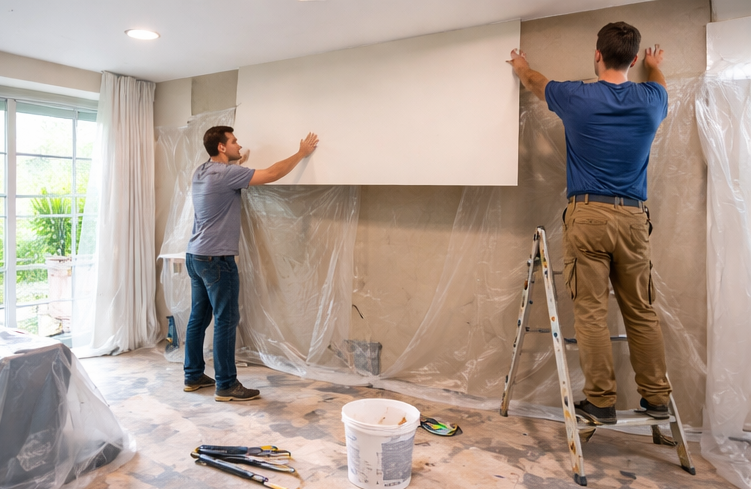
Full wall replacement sounds extreme, but in many cases, it is the more logical long-term decision. This is especially true when damage is widespread or the wall has been repaired multiple times before.
Drywall repair cost for full replacement typically ranges from $800 to $2,500 per wall, depending on size, accessibility, and finish quality. This includes removing the old drywall, installing new panels, taping, mudding, sanding, and repainting.
The main benefit is uniformity. Instead of blending patches into an old surface, the entire wall gets a fresh finish. This is particularly important in high-visibility areas like living rooms or open-plan spaces.
Full replacement also allows contractors to inspect what is behind the wall. Issues like mold, insulation gaps, or wiring problems can be addressed during the process. This is something patch repairs cannot offer.
That said, full replacement is not always necessary. If damage is localized and the rest of the wall is in good condition, replacing everything can be overkill. The cost difference is significant, and the added value may not justify it.
A common scenario where replacement makes sense is after water damage. Even if only part of the wall looks affected, moisture can spread internally. In these cases, patching may trap hidden damage and lead to bigger problems later.
The Hidden Costs Most Homeowners Miss
One of the biggest surprises in drywall repair cost is how often additional work is required. What starts as a simple repair can expand once the contractor begins the job.
Paint matching is a frequent issue. Even if you still have the original paint, aging and lighting conditions can cause color variations. Contractors may need to repaint the entire wall to ensure a consistent look.
Texture matching is another challenge. Homes built in different decades often use distinct wall textures. Replicating these textures takes time and skill, which adds to labor costs.
There is also the question of access. Repairs behind furniture, in tight hallways, or near ceilings can increase labor time. Moving furniture or setting up protective coverings is often part of the job, even if it is not immediately obvious.
Many homeowners also overlook ceiling connections. Damage near the top of a wall can affect the ceiling line. In such cases, drywall repair cost may overlap with ceiling work. If that happens, it is worth understanding related expenses outlined in this guide on ceiling repair cost factors.
When Patching Fails and Replacement Becomes Inevitable
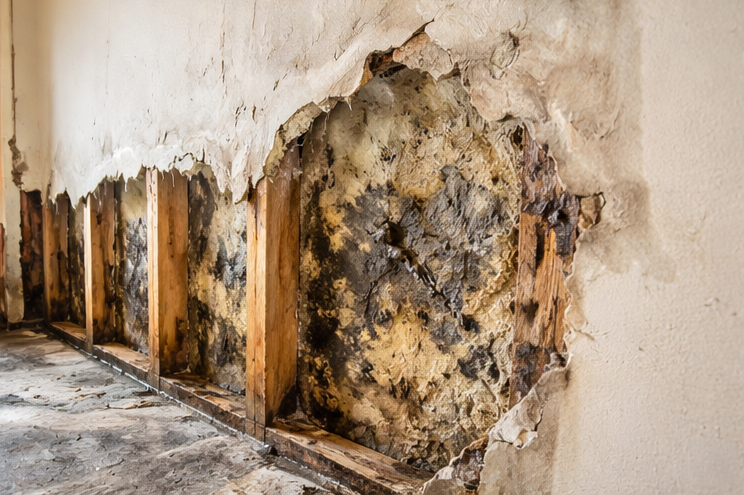
A common misconception is that patching is always the cheaper option. In reality, repeated patching can become more expensive than replacing the wall once.
Imagine a wall with several small holes from previous installations, plus minor water damage near the baseboard. Patching each section might cost $200 to $300 per area. Over time, the total can exceed the cost of a full replacement.
There is also a visual impact. Multiple patches, even when done well, can create subtle inconsistencies. Under certain lighting, these differences become noticeable. For homeowners planning to sell, this can affect buyer perception.
Structural integrity is another concern. Drywall is not just decorative. It contributes to fire resistance and sound insulation. Excessive patching can weaken these properties, especially if repairs are not done correctly.
In older homes, drywall may already be brittle. Cutting into it for patches can cause cracks to spread. In these cases, replacement is often the safer and more cost-effective option in the long run.
If you are comparing both approaches in detail, including cost breakdowns and scenarios, this analysis of interior wall repair options provides additional context.
Choosing the Right Option Based on Your Situation
Deciding between a small patch and full wall replacement comes down to context, not just cost. The same damage can lead to different decisions depending on your goals.
If you are fixing a rental property quickly and cost is the priority, patching is usually sufficient. The goal is to restore function and appearance without overinvesting.
If you are preparing your home for sale, appearance matters more. Buyers notice inconsistencies, even subtle ones. In this case, spending more on a full replacement may deliver better returns.
For long-term homeowners, durability becomes the key factor. Repeated repairs are inconvenient and can add up over time. Investing in a more permanent solution often makes sense.
Timing also plays a role. If you are already planning renovations, combining drywall work with other projects can reduce overall costs. Contractors can work more efficiently when tasks are grouped together.
Finally, consider the cause of the damage. Cosmetic issues are one thing. Structural or moisture-related problems are another. Treating the symptom without addressing the cause is where most repair decisions fail.
Drywall repair cost is not just a number. It is a reflection of labor, skill, and long-term impact. Understanding that difference is what separates a quick fix from a smart decision.