buildcostguide.site – Whole House Rewiring Cost in the US typically ranges widely depending on home size, wiring complexity, and accessibility during electrical upgrades.
Electrical systems in American homes are expected to support far more devices than they were several decades ago. Older wiring that once powered a few lights and appliances may now struggle to handle modern electrical loads, creating safety concerns and performance limitations.
When homeowners begin researching electrical upgrades, one question quickly surfaces: how much does it cost to rewire an entire house? The answer is rarely straightforward. Pricing varies depending on the age of the home, the accessibility of existing wiring, the scope of upgrades required, and regional labor rates.
Understanding the components behind Whole House Rewiring Cost helps homeowners evaluate estimates more realistically and plan renovation budgets with fewer surprises.
What Is Included in a Whole House Rewiring Project
Rewiring a home involves far more than simply replacing old wires. In most cases, electricians must modernize multiple parts of the electrical system to ensure the new wiring complies with current safety codes.
A typical whole house rewiring project may include:
Removing or disconnecting outdated wiring systems such as knob-and-tube or aluminum wiring
Installing new copper wiring throughout the home
Replacing outlets, switches, and junction boxes
Updating grounding systems
Connecting circuits to an upgraded electrical panel
Ensuring the home meets modern electrical code requirements
The complexity increases significantly if walls must be opened or if wiring routes are difficult to access. Homes with finished basements, plaster walls, or limited attic space often require more labor-intensive work.
In many cases, rewiring is also paired with broader electrical modernization projects. Homeowners sometimes review broader renovation budgets using resources like this comprehensive breakdown of typical home repair and replacement pricing to understand how electrical work fits into larger property upgrades.
Average Whole House Rewiring Cost in the US
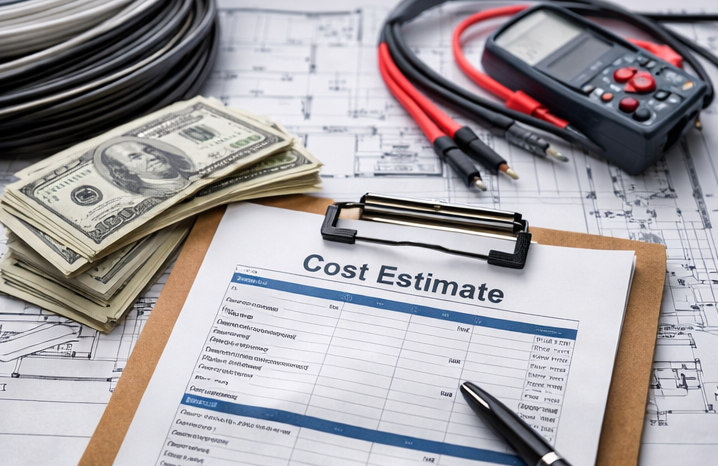
Across the United States, the average price to rewire a home typically falls between $8,000 and $25,000. However, large homes or complex projects can exceed $30,000.
Several common pricing ranges illustrate how size affects cost.
Small Homes (1,000–1,500 sq ft)
Estimated cost: $8,000 – $15,000
Smaller homes require fewer circuits and shorter wiring runs. Labor time is also reduced because electricians can access most areas quickly.
However, if the home has outdated plaster walls or limited crawlspace access, labor costs may rise even in smaller properties.
Mid-Sized Homes (1,500–2,500 sq ft)
Estimated cost: $12,000 – $22,000
This size range represents a large share of American homes. Rewiring projects at this scale usually involve:
10–20 circuits
replacement of dozens of outlets and switches
installation of new lighting wiring
Labor often accounts for more than half of the total project cost.
Large Homes (2,500+ sq ft)
Estimated cost: $18,000 – $30,000+
Large houses may require extensive circuit expansion to meet modern code requirements. Kitchens, bathrooms, laundry rooms, and home offices typically demand dedicated circuits.
Homes with multiple stories or complex layouts can add substantial labor time, especially when electricians must navigate finished ceilings or tight wall cavities.
Factors That Influence Rewiring Costs
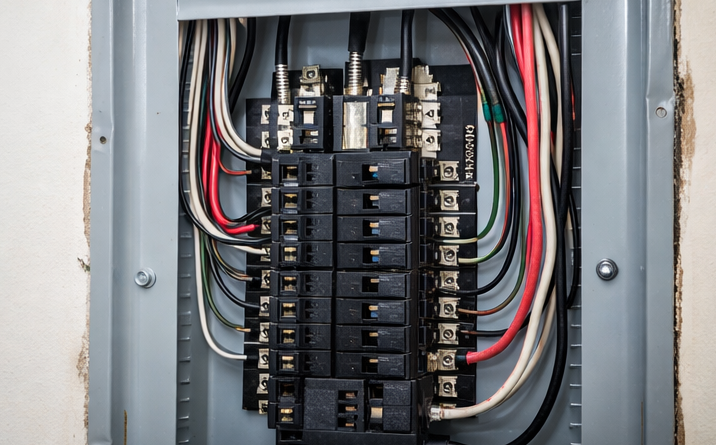
Two homes of identical size can have dramatically different rewiring costs. Several factors explain the variation.
Age of the Home
Older homes frequently require additional work because outdated wiring systems must be carefully removed or isolated.
Common legacy systems include:
knob-and-tube wiring (pre-1940 homes)
aluminum wiring (1960s–1970s construction)
undersized circuits not designed for modern electrical loads
Bringing these homes up to current safety standards often increases project scope.
Accessibility of Walls and Ceilings
Labor is usually the largest portion of rewiring costs. If electricians can easily access wiring paths through attics, basements, or crawlspaces, installation becomes significantly faster.
Homes without these access points may require:
cutting drywall
opening plaster walls
removing ceiling sections
After the electrical work is completed, additional repair work may be required to restore interior surfaces.
Electrical Panel Capacity
A whole house rewiring project often exposes another limitation: the existing electrical panel may not support the number of circuits needed for modern usage.
Older homes frequently have 60-amp or 100-amp panels, which are often insufficient for modern electrical demand. In these cases, homeowners may also need to consider typical electrical panel upgrade pricing based on amperage and home size when planning their total electrical upgrade budget.
Panel upgrades can add $1,500 to $5,000 or more depending on service capacity and local permitting requirements.
Local Labor Rates
Electricians’ hourly rates vary widely across the United States. Urban areas and regions with higher construction demand often have significantly higher labor costs.
Typical electrician labor rates range between $75 and $150 per hour, though specialized electrical contractors in major cities may charge even more.
Permit and Inspection Fees
Electrical rewiring almost always requires local permits and inspections. These fees ensure that the new wiring meets safety standards and local building codes.
Permit costs typically range from $200 to $1,000, depending on the jurisdiction.
Signs a Home May Need Complete Rewiring
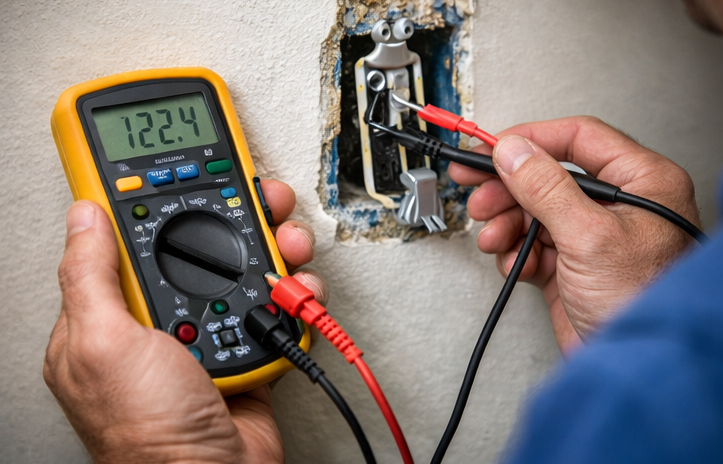
Homeowners sometimes assume that replacing a few outlets or circuits will solve electrical problems. In many older homes, however, localized repairs may only provide temporary solutions.
Several warning signs suggest that a full rewiring project may be necessary.
Frequent Circuit Breaker Trips
Circuit breakers are designed to protect wiring from overload. When breakers trip repeatedly, it may indicate that the wiring system cannot safely handle current electrical demand.
Flickering or Dimming Lights
Lights that flicker when appliances start running often signal overloaded circuits or deteriorating wiring connections.
Two-Prong Outlets Without Grounding
Ungrounded outlets are common in older homes built before modern electrical safety standards. While adapters can temporarily accommodate modern plugs, the underlying wiring may lack proper grounding protection.
Burning Smells or Warm Outlets
Any burning odor, discoloration around outlets, or unusually warm electrical components should be evaluated immediately. These symptoms may indicate deteriorating wiring insulation or overloaded circuits.
Insurance or Inspection Requirements
Homebuyers sometimes discover wiring issues during property inspections. Certain insurance companies may also require upgrades if a home still contains outdated electrical systems.
Partial Rewiring vs Full Rewiring
Not every property requires a complete electrical overhaul. In some cases, electricians may recommend targeted upgrades rather than replacing every wire in the house.
When Partial Rewiring May Be Sufficient
Partial rewiring may work if:
only certain rooms contain outdated wiring
the electrical panel already supports additional circuits
the home underwent previous electrical upgrades
Common partial projects include kitchen or bathroom circuit replacements.
When Full Rewiring Is More Practical
A full rewiring project is often recommended when:
most circuits still use outdated wiring types
the electrical panel must be replaced anyway
walls are already open during renovation
When remodeling work is already underway, electricians can install new wiring much more efficiently because interior surfaces are accessible.
In those cases, the marginal cost of rewiring the entire home may be significantly lower than performing the work later.
How Rewiring Fits Into Larger Home System Upgrades
Electrical upgrades rarely occur in isolation. Many homeowners choose to modernize several home systems at the same time, especially during large renovation projects.
For example, installing a new heating or cooling system may increase electrical demand, particularly when switching to high-efficiency heat pumps or modern HVAC equipment. In such situations, understanding typical residential HVAC repair and service pricing across the US can help homeowners evaluate whether electrical upgrades should happen alongside mechanical system improvements.
Coordinating these projects can sometimes reduce labor duplication, since contractors may already be opening walls, ceilings, or utility spaces.
Cost-Saving Considerations When Planning a Rewiring Project
Although whole house rewiring is a significant investment, certain planning strategies can help control costs.
Rewire During Major Renovations
If walls are already being opened for remodeling, electricians can install wiring far more easily. This can reduce labor time dramatically compared to working through finished walls.
Prioritize High-Risk Areas
If budget limitations prevent a full rewiring immediately, some homeowners begin with high-load or high-risk areas such as:
kitchens
bathrooms
laundry rooms
garages
These areas typically have the highest electrical demand.
Improve Accessibility Where Possible
Simple steps like clearing attic access points or improving crawlspace entry can reduce labor time. While these changes may seem minor, they can make installation much easier for electricians.
Obtain Multiple Estimates
Electrical pricing varies widely between contractors. Detailed estimates help homeowners understand exactly what work is included, from outlet replacement to panel upgrades and permit costs.
Transparent quotes also make it easier to compare project scope rather than simply comparing total price.
Electrical wiring is one of the least visible parts of a home, yet it plays a critical role in safety and everyday functionality. As homes adopt more connected devices, electric appliances, and energy-intensive systems, older wiring infrastructures often struggle to keep up.
For homeowners considering upgrades, understanding the factors behind Whole House Rewiring Cost provides a clearer picture of what a project may involve — and why estimates can vary so widely from one property to another.