buildcostguide.site – A detailed breakdown of wall repair cost in the US, comparing drywall patch repairs and full replacement, including labor factors and when each option makes sense.
Interior wall damage is common in residential properties across the United States. Small holes from accidental impacts, cracks caused by settling, or water-damaged drywall often require some form of repair. Yet the cost can vary widely depending on the extent of the damage and the repair method used.
In most situations, homeowners face two primary options: patching the damaged drywall or replacing an entire section of the wall. Each approach carries different labor requirements, material costs, and long-term considerations.
Understanding how these repair methods differ helps explain why estimates for wall repair cost can range from under a hundred dollars to several hundred—or more—depending on the situation.
What Typically Drives Interior Wall Repair Costs
Interior wall repair pricing is influenced by several practical factors rather than a single standardized rate. Contractors typically evaluate the size of the damaged area, the cause of the damage, and how much finishing work is required after the repair.
Minor damage such as nail holes, small dents, or narrow cracks generally falls into the lowest cost range. These repairs often involve simple filling compounds, sanding, and repainting.
Larger damage—such as holes from door handles, furniture impacts, or removed fixtures—may require drywall patching. In this process, a technician cuts out the damaged portion and installs a new drywall patch supported by backing strips.
Costs increase significantly when the repair involves structural issues behind the wall. For example, if plumbing leaks or electrical upgrades caused the wall damage, contractors may need to open larger sections of drywall to access the underlying systems.
Homeowners sometimes discover these connections when dealing with related repairs, such as addressing plumbing failures that require opening walls. Situations like that often overlap with expenses similar to those discussed in this breakdown of plumbing repair pricing scenarios across US homes.
Drywall Patch Repair: When a Partial Fix Is Enough
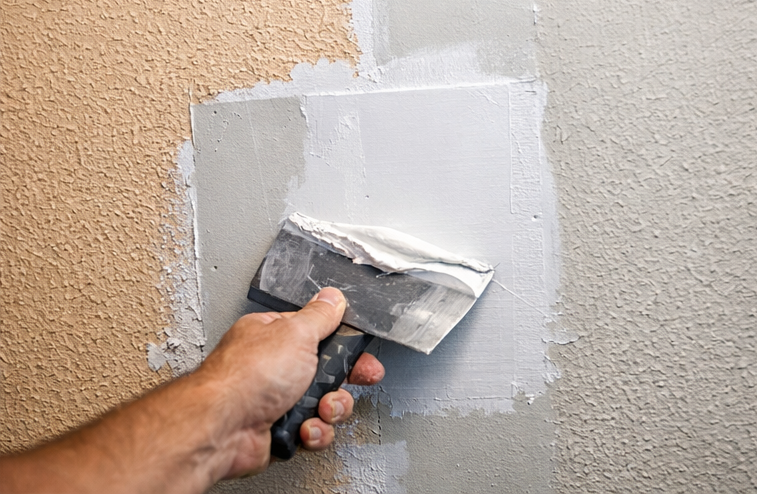
Drywall patching is the most common solution for localized wall damage. It works well when the damaged section is relatively small and the surrounding drywall remains structurally intact.
Typical examples include:
Holes from door handles or furniture impacts
Medium-sized punctures from accidental damage
Cutouts left after minor electrical or plumbing work
Small sections of water-damaged drywall that have dried fully
The process usually follows a predictable sequence. A contractor cuts out the damaged drywall in a square or rectangular shape, installs a backing support, and attaches a new drywall patch of matching thickness. Joint compound is then applied over the seams and sanded smooth before repainting.
Because the repair area is limited, material costs remain relatively low. A small sheet of drywall, joint tape, compound, and paint generally represent only a modest portion of the total bill.
Labor, however, still accounts for most of the expense. Multiple layers of joint compound often need to dry between applications, which extends the repair timeline even for small areas.
In many US markets, drywall patch repairs typically range between roughly $150 and $450 depending on size, accessibility, and finishing work.
Full Wall Replacement: When Patching No Longer Makes Sense
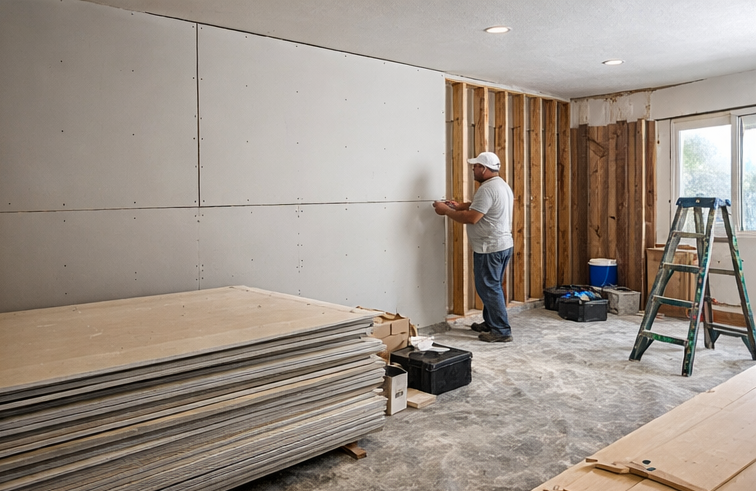
There are situations where patching a wall becomes impractical or visually inconsistent. When damage affects a large portion of the wall surface, contractors often recommend replacing the entire drywall section.
This typically occurs in several scenarios:
Extensive Water Damage
Water intrusion is one of the most common reasons for full drywall replacement. Once drywall becomes saturated, its internal gypsum core can weaken, causing crumbling or mold growth.
Even if the surface appears dry later, structural integrity may already be compromised. Contractors often remove the affected panels entirely to ensure the wall cavity can dry properly and prevent future issues.
Large Structural Openings
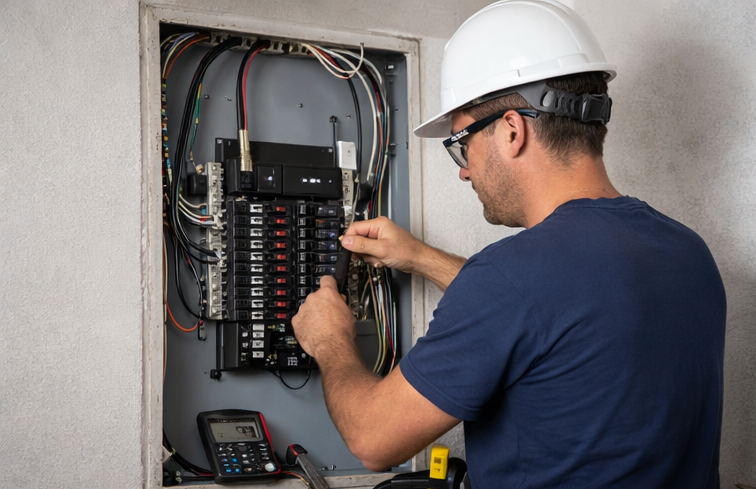
Major electrical or plumbing upgrades may require removing significant portions of drywall. For example, whole-house electrical rewiring projects often involve opening multiple wall cavities to route new wiring.
After that kind of work, contractors frequently replace full drywall panels rather than attempting numerous patches. Situations like this are often associated with broader renovation costs similar to those discussed in this overview of electrical upgrade and whole-house rewiring expenses.
Uneven Surfaces From Multiple Patches
If a wall already contains several previous repairs, adding more patches can produce noticeable texture differences. Replacing a full section of drywall allows the surface to be refinished evenly.
Full drywall replacement usually costs more because it requires removing larger panels, installing new sheets, taping multiple seams, and repainting a wider surface area. In many US regions, the cost for replacing a full interior wall section may range from about $400 to $1,200 depending on wall size and finishing requirements.
Labor Costs and Why They Dominate Wall Repairs
Material costs for drywall work are relatively modest compared to labor. Drywall sheets, joint compound, tape, and fasteners typically account for a small portion of the overall project price.
Labor becomes the dominant factor because drywall finishing requires time and precision.
Several steps must occur sequentially:
Cutting and removing damaged material
Installing backing supports or framing adjustments
Mounting new drywall
Applying joint tape and compound
Sanding and smoothing
Priming and repainting
Each stage contributes to the final appearance of the wall. Poor finishing work can leave visible seams, uneven textures, or paint inconsistencies.
Drying time between compound layers also adds to labor scheduling. Contractors may return to the site multiple times to complete the job properly.
For homeowners evaluating estimates, it often becomes clear that the complexity of finishing work—not the drywall itself—is what drives most of the wall repair cost.
Texture Matching and Paint Blending Challenges
One often overlooked cost factor in drywall repair is surface finishing. Even a perfectly installed patch can become noticeable if the wall texture or paint color does not match the surrounding area.
Many homes in the United States use textured finishes such as orange peel, knockdown, or skip trowel. Recreating these textures requires specific tools and experience.
Matching the texture is only one part of the process. Paint blending can present its own challenges. Fresh paint applied to a repaired section may appear slightly different from older paint due to fading, lighting conditions, or minor color variations.
Contractors sometimes recommend repainting an entire wall rather than just the patched area. While this increases the immediate cost, it often produces a more consistent final appearance.
These finishing considerations explain why repair estimates may vary even for similar damage sizes.
When Wall Damage Signals Larger Home Repair Issues
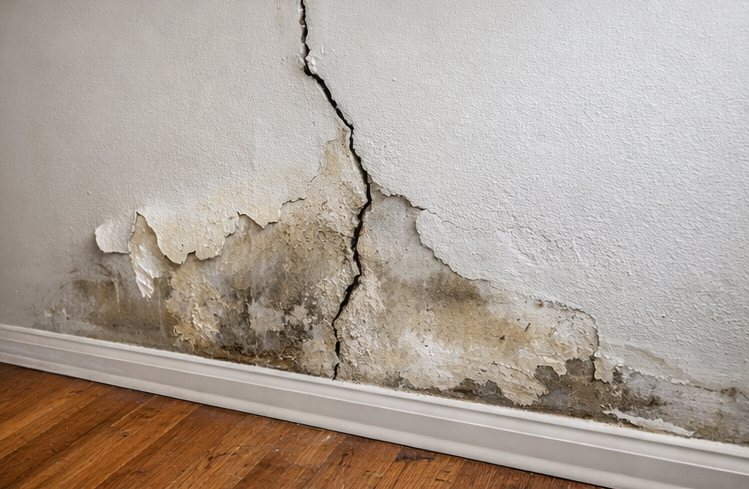
Interior wall damage occasionally reveals deeper maintenance problems within a home. Cracks that appear repeatedly may indicate structural movement or foundation settling. Water damage often points to plumbing leaks or roof issues.
For homeowners managing multiple repairs, wall damage is sometimes only one component of a broader maintenance budget. Costs associated with interior repairs frequently appear alongside other systems that require periodic upgrades.
Understanding these broader expenses can provide useful context when comparing repair estimates. For example, many homeowners reviewing interior repair quotes eventually explore the wider landscape of typical home repair and replacement costs across the US housing market.
Viewing repairs within that larger framework can make individual estimates easier to interpret.
Choosing Between Patch and Replacement
Deciding whether to patch drywall or replace a larger section usually comes down to three practical considerations.
First is the size of the damage. Small localized holes rarely justify removing entire drywall panels.
Second is the underlying cause of the problem. If moisture, structural shifting, or system upgrades caused the damage, contractors may recommend broader replacement to prevent future issues.
Third is the desired visual outcome. In highly visible areas such as living rooms or entryways, homeowners sometimes prefer full wall replacement to ensure a perfectly uniform finish.
In many homes, drywall patching remains the most efficient solution for isolated damage. Full replacement becomes more practical when damage spreads across a larger area or when repairs are already opening the wall for other systems.
Both approaches ultimately serve the same goal: restoring the wall’s structural integrity and visual consistency while keeping repair work proportionate to the actual damage.