buildcostguide.site – Foundation problems rarely start as emergencies. More often, they show up quietly—small cracks in drywall, doors that don’t close properly, or floors that feel slightly uneven. Homeowners who notice these signs typically want one clear answer: what is the foundation repair cost likely to be?
The reality is that costs vary widely in the United States. The total expense depends on the severity of the damage, the type of foundation, soil conditions, regional labor rates, and the specific repair method used. A minor crack repair may cost a few hundred dollars. A major structural stabilization project can reach five figures.
Understanding how severity and repair method influence pricing helps homeowners make informed decisions without overreacting—or delaying action longer than they should.
Why Foundation Damage Varies So Much Across the US
Foundation repair pricing is closely tied to regional conditions. In states with expansive clay soils—such as parts of Texas, Oklahoma, and Colorado—soil movement is a leading cause of foundation shifting. In the Midwest, freeze-thaw cycles create pressure around footings. In coastal regions, moisture and drainage issues are common drivers of settlement.
Different foundation types also change the equation:
Concrete slab foundations
Pier and beam foundations
Basement foundations
Crawl space foundations
Each structure responds differently to soil movement and moisture. For example, a slab foundation may crack and settle as a single unit, while a pier and beam system may show uneven sagging in localized areas.
These structural differences significantly influence foundation repair cost because they determine the equipment, materials, and labor required.
Foundation Repair Cost by Severity of Damage
Severity is usually the first factor contractors assess. Not every crack signals structural failure, but some do indicate shifting or settlement that requires stabilization.
Minor Cosmetic Damage
This category includes:
Hairline cracks in concrete
Small drywall cracks above doors or windows
Minor surface flaking
Typical cost range in the US: $300 to $1,500
Repairs at this level may involve epoxy injection, crack sealing, or surface patching. These fixes address moisture intrusion or cosmetic concerns rather than structural instability.
Moderate Structural Movement
At this stage, homeowners might notice:
Doors sticking consistently
Visible separation around window frames
Uneven floors in specific rooms
Wider foundation cracks (1/8 inch or more)
Typical cost range: $2,000 to $8,000
This often requires stabilization methods such as installing steel piers or concrete pilings under affected sections of the foundation. The number of piers needed heavily influences total cost.
Severe Settlement or Structural Failure
Serious cases may include:
Large step cracks in brick or block
Significant floor slope
Gaps between walls and ceilings
Water intrusion through foundation walls
Partial foundation collapse in extreme cases
Typical cost range: $10,000 to $30,000+
Extensive damage may require underpinning large portions of the home, replacing sections of foundation walls, or combining structural repair with drainage correction. Engineering assessments are common at this stage and may add $500 to $1,500 to project costs.
Foundation Repair Cost by Repair Method
Severity determines scope, but repair method determines pricing structure. Each approach has different material costs, installation complexity, and long-term performance expectations.
Steel Push Piers
Average cost per pier in the US: $1,000 to $3,000
Total project cost: Often $5,000 to $20,000
The number of piers required depends on how much of the foundation has settled. Homes with heavier construction may require more reinforcement.
Helical Piers
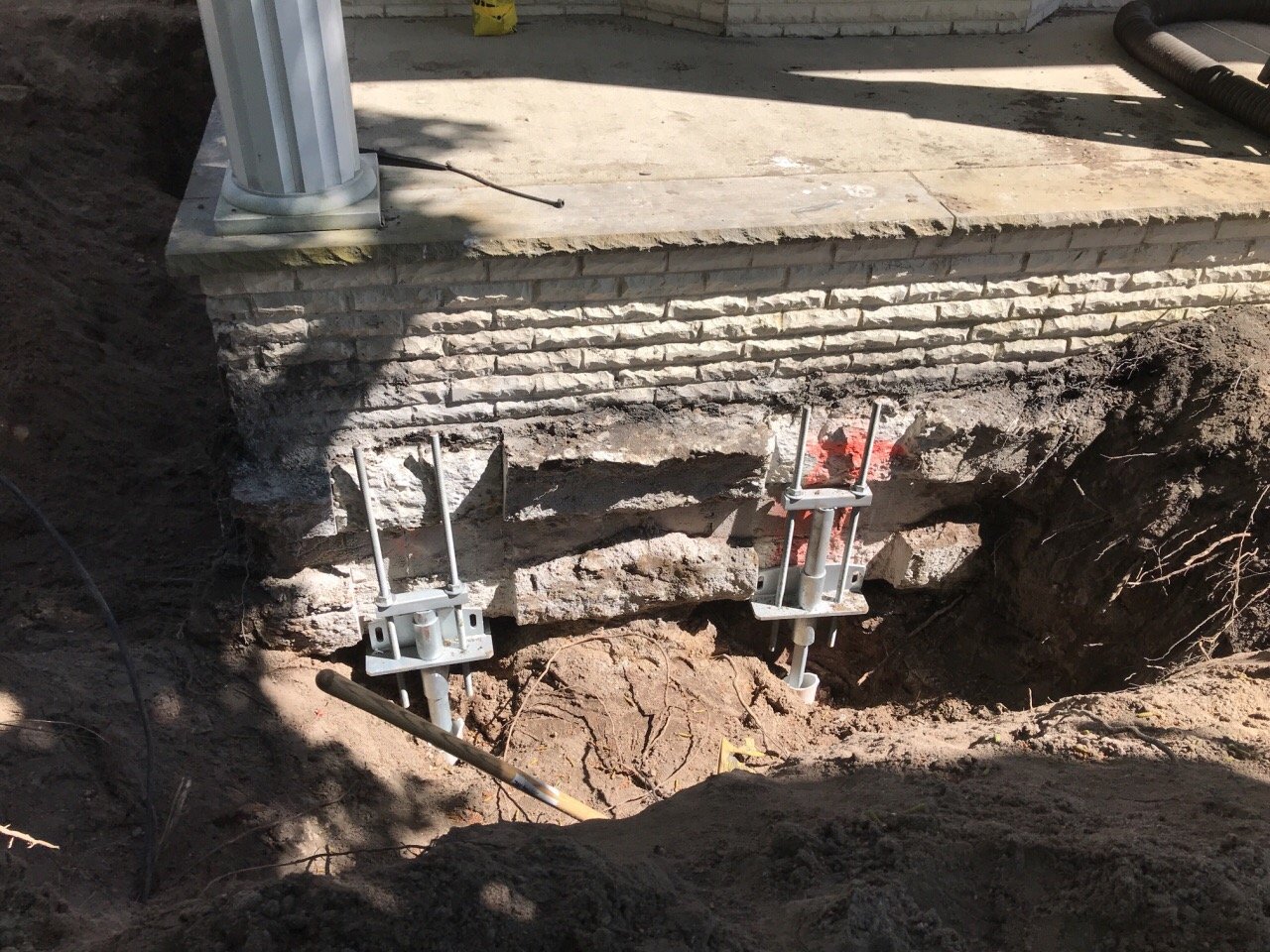
Average cost per pier: $1,200 to $3,500
Typical project range: $6,000 to $25,000
Helical systems allow precise load measurements during installation, which some contractors prefer for engineering documentation.
Slab Jacking or Mudjacking
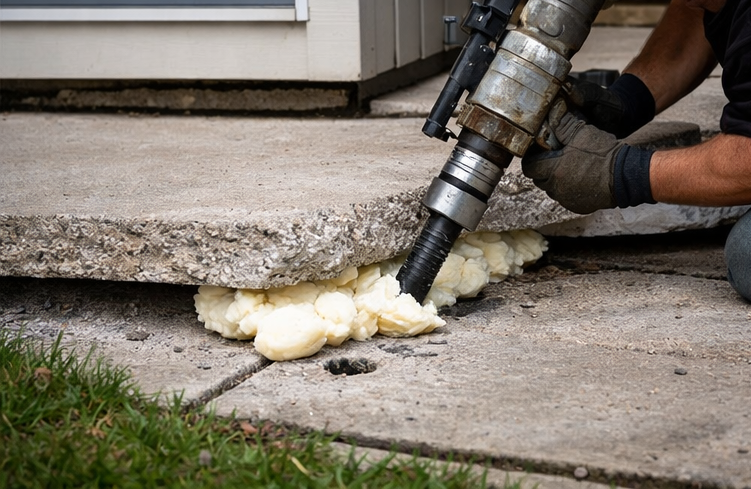
Typical cost: $1,500 to $7,000
Slab jacking is usually appropriate for smaller settlement areas and may not address deeper soil instability. It’s often more affordable than full underpinning but may not be suitable for severe movement.
Wall Anchors and Carbon Fiber Reinforcement
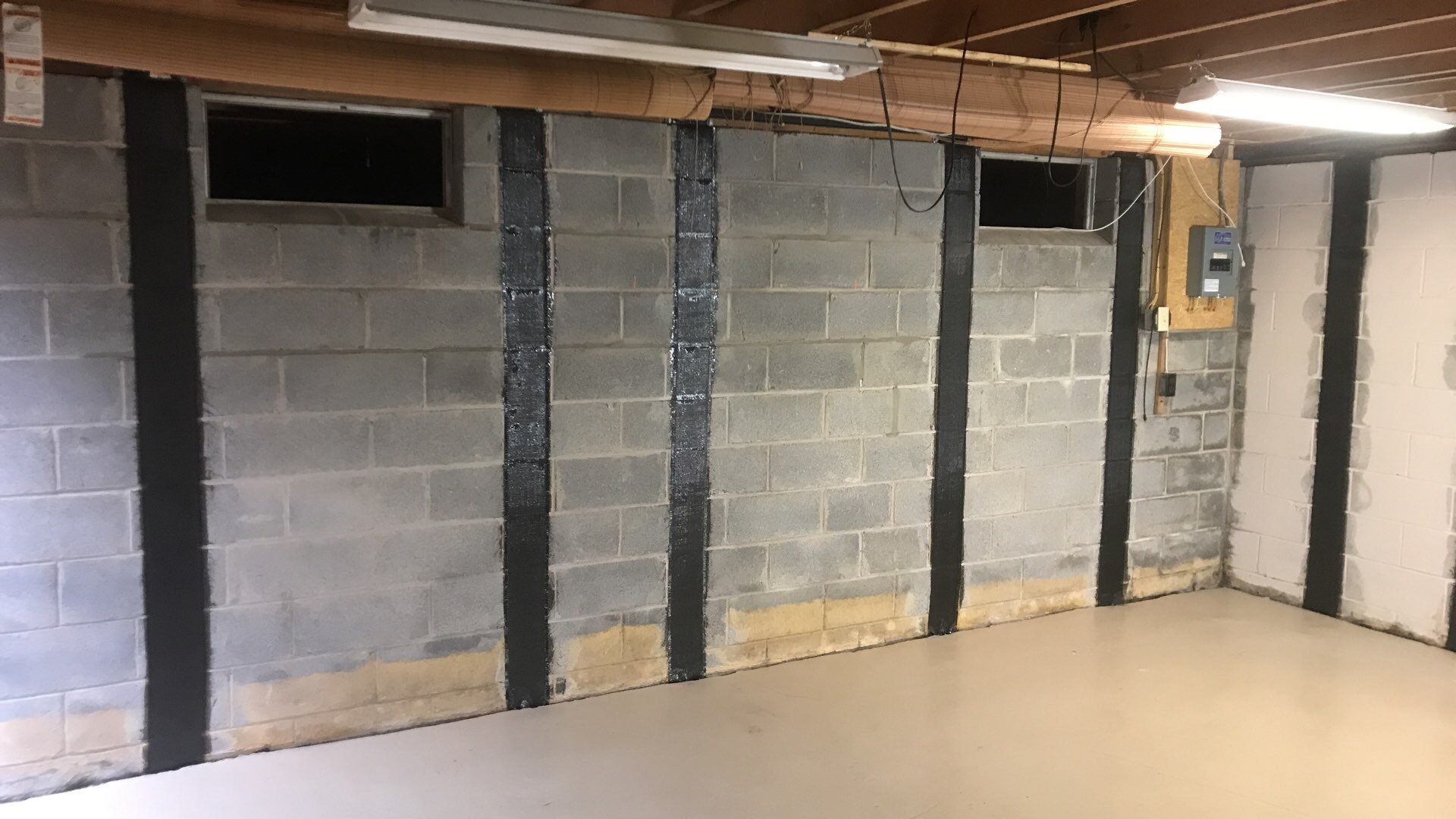
Cost range: $3,000 to $12,000
Wall anchors stabilize lateral pressure from soil, while carbon fiber systems reinforce cracked concrete walls. These solutions address horizontal movement rather than vertical settlement.
How Foundation Type Impacts Total Repair Cost
The type of foundation influences both labor intensity and access difficulty.
For example, slab foundations typically require exterior excavation for pier installation. That can increase labor time and landscaping restoration costs.
Pier and beam homes may allow easier access underneath the structure, but repairs can involve both structural framing and foundation elements. In many cases, foundation shifting also leads to floor sagging.
Crawl space homes add another layer of complexity. Moisture problems often contribute to soil movement or wood rot. In some cases, structural repair is paired with humidity control improvements.
If you’re comparing broader structural repair expenses across different home systems, reviewing these costs within a comprehensive overview of home repair and replacement expenses in the United States can provide helpful context for budgeting.
Additional Cost Factors Beyond Repair Method
Two homes with similar visible damage can receive very different estimates. That’s because several secondary variables influence final pricing.
Soil and Engineering Requirements
Some municipalities require engineered repair plans for major foundation work. Engineering reports typically cost between $500 and $1,500 but can help clarify repair scope and prevent unnecessary work.
Highly expansive soils may also require deeper piers, increasing material and labor expenses.
Accessibility and Excavation
Limited access around the home—such as tight property lines or extensive landscaping—can increase labor time. Interior pier installation may require cutting through flooring, which adds restoration costs.
Plumbing and Drainage Corrections
Foundation movement sometimes damages underground plumbing lines. Leak detection and plumbing repairs may add $1,000 to $5,000 or more depending on severity.
In areas with poor drainage, contractors may recommend adding or modifying gutters, grading, or installing French drains to reduce future soil movement.
Financial Implications and Insurance Considerations
Most homeowners insurance policies in the US do not cover foundation settlement caused by soil movement or normal wear and tear. Coverage may apply if damage results from a covered event, such as a burst pipe.
Because foundation repair cost can be substantial, some homeowners explore:
Home equity loans
Personal loans
Contractor financing options
Financing terms vary widely based on credit profile and lender policies.
From a real estate perspective, documented foundation repairs performed by licensed contractors can preserve property value. However, unresolved structural issues often complicate home sales and inspections.
When to Act and When to Monitor
Not every crack requires immediate structural repair. Small, stable hairline cracks may simply need monitoring. Many contractors recommend documenting crack width and checking for changes over time.
However, certain warning signs justify prompt professional evaluation:
Rapidly widening cracks
Doors or windows that suddenly misalign
Noticeable floor slope
Water entering through foundation walls
Delaying repairs when active settlement is occurring often increases foundation repair cost over time. Early stabilization typically limits the number of piers required.
Long-Term Stability and Preventative Measures
Once repairs are completed, ongoing maintenance helps protect the investment.
Consistent moisture management is key. That includes:
Maintaining proper gutter drainage
Ensuring soil slopes away from the foundation
Avoiding overwatering landscaping near the home
Addressing plumbing leaks quickly
In regions with expansive soils, seasonal watering schedules may help prevent extreme soil shrinkage during drought conditions.
Foundation systems are designed to support structures for decades, but they depend heavily on stable soil conditions. Repair methods address structural symptoms, yet long-term performance often depends on environmental management around the home.
Understanding how severity and repair method influence foundation repair cost allows homeowners to approach the issue methodically. Rather than focusing solely on the initial estimate, it’s helpful to consider repair durability, soil conditions, and related structural systems. Careful evaluation supports practical, informed decisions tailored to the specific conditions of each property.