buildcostguide.site – Fence replacement cost in the US varies widely depending on materials, labor, and property layout. Learn how wood, vinyl, and metal options compare.
A residential fence rarely attracts attention until it starts leaning, rotting, or falling apart. At that point, homeowners face a decision that involves more than aesthetics: replacing a fence can quickly become a substantial home maintenance expense.
The fence replacement cost in the United States varies significantly depending on materials, labor rates, property layout, and regional pricing differences. While online estimates often present simple averages, real-world projects tend to involve a range of structural and logistical factors that influence the final number.
Understanding how different fence materials affect costs—and what additional variables influence installation—helps homeowners approach the project with realistic expectations.
What Typically Drives Fence Replacement Cost
The total price of replacing a fence goes beyond the cost of panels and posts. In many cases, labor and site preparation represent a large portion of the final bill.
Several factors commonly shape the overall cost:
Fence length and property layout
Longer fences obviously require more material and labor. However, the layout of the property can matter just as much. Sloped terrain, uneven soil, or obstacles such as trees and utility lines may require additional labor during installation.
Removal of the existing fence
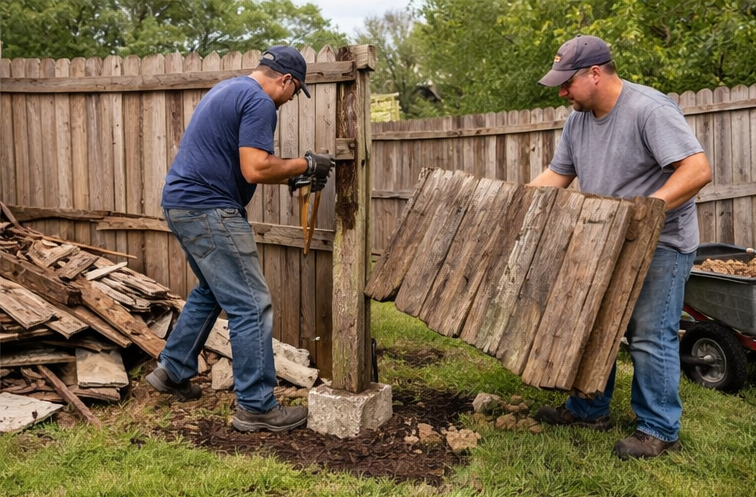
Replacing a fence usually involves demolition and disposal of the old structure. Contractors often charge separately for removing wood posts set in concrete, hauling away debris, and preparing the ground for new installation.
Post installation method
Posts anchored in concrete increase stability but add time and material costs. Some metal fence systems use driven posts instead, which may reduce labor depending on soil conditions.
Local labor rates
Installation prices vary widely between regions. Urban areas with higher contractor demand typically have higher labor rates than rural markets.
Homeowners comparing projects across the country will often notice that these labor differences resemble those seen in broader renovation pricing benchmarks such as this comprehensive overview of typical home repair pricing across the United States.
Wood Fence Replacement: Cost Structure and Considerations
Wood remains one of the most common residential fencing materials in the US. Its widespread use is largely due to availability, customization options, and relatively moderate upfront cost.
Typical wood fence replacement costs generally fall between $20 and $40 per linear foot, including removal and installation. However, that range can shift depending on wood type and design.
Pressure-Treated Pine
Pressure-treated pine is often the most affordable option. It resists insects and moisture better than untreated lumber, making it suitable for many climates.
Because the material is widely available, installation costs tend to remain predictable. However, maintenance requirements—such as sealing or staining—can influence long-term ownership cost.
Cedar
Cedar fences are typically more expensive than pine but offer natural resistance to decay and insects. Many homeowners choose cedar for its appearance and longevity.
Material costs are higher, but cedar often requires less chemical treatment over time.
Redwood and Specialty Woods
In certain regions, particularly along the West Coast, redwood fencing remains popular. Its durability and visual appeal can justify the price for some homeowners, though costs may exceed $45 per linear foot when installed.
Wood fencing also introduces long-term considerations. Exposure to moisture, insects, and UV damage can gradually weaken boards and posts, which means replacement cycles may occur sooner compared with synthetic materials.
Vinyl Fence Replacement: Higher Upfront Cost, Lower Maintenance
Vinyl fencing has become increasingly common in suburban neighborhoods over the past two decades. The material offers a consistent appearance and requires minimal maintenance compared with traditional wood.
Typical vinyl fence replacement costs usually range between $30 and $60 per linear foot, depending on style and panel quality.
Several characteristics contribute to these costs.
Prefabricated Panel Systems
Vinyl fences are often manufactured as modular panels that fit into routed posts. This design can speed up installation compared with building a fence board-by-board.
However, panel systems require precise spacing between posts, which means contractors must carefully measure and align each section during installation.
Material Durability
Vinyl does not rot, warp, or require repainting. For homeowners who prefer a low-maintenance yard, this characteristic can offset the higher initial installation cost.
That said, vinyl panels can crack under strong impact or extreme cold. Repairs sometimes require replacing entire panels rather than individual boards.
Limited Customization
Unlike wood, vinyl fencing typically comes in predetermined styles and colors. While the material remains visually consistent, design flexibility is somewhat limited.
From a long-term budgeting perspective, some homeowners compare fence replacement with other outdoor renovation expenses—such as the structural work involved in a typical concrete driveway replacement project priced per square foot—to understand how exterior improvements can accumulate over time.
Metal Fence Replacement: Aluminum, Steel, and Wrought Iron
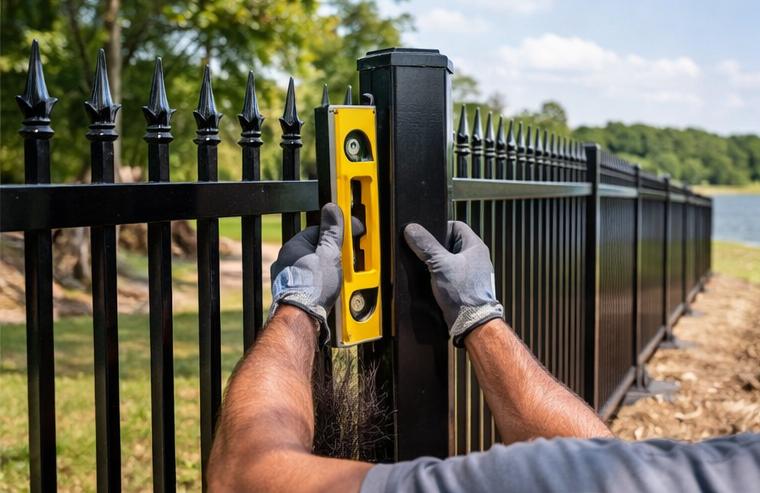
Metal fencing often occupies the higher end of the residential cost spectrum. The category includes several distinct materials, each with different price points and installation requirements.
Overall, metal fence replacement typically ranges from $35 to $80 per linear foot, though premium wrought iron designs can exceed that.
Aluminum Fencing
Aluminum fences are popular because they resemble wrought iron but cost significantly less. They resist rust and usually require minimal maintenance.
Installation is relatively straightforward due to lightweight panels, which helps keep labor costs manageable.
Steel Fencing
Steel fences provide stronger structural performance than aluminum. They are commonly powder-coated to resist corrosion.
However, heavier materials can increase installation labor. Posts often require deeper anchoring to support the additional weight.
Wrought Iron
Wrought iron fences remain one of the most durable and visually distinctive options. Many historic properties and upscale homes use custom ironwork designs.
These fences are typically fabricated to order, which can significantly raise both material and installation costs.
Metal fencing projects often share cost characteristics with other structural outdoor installations. For instance, when homeowners compare property upgrades, the investment level can resemble the work involved in replacing or repairing a residential deck structure, particularly when both projects require extensive labor and material coordination.
Hidden Costs That Affect Fence Replacement Projects
Material choice explains only part of the final price. In practice, several less obvious factors can increase fence replacement costs.
Permits and local regulations
Many municipalities require permits for new fence installation, especially if the structure exceeds certain height limits. Permit fees themselves may be modest, but the approval process can introduce delays.
Local regulations may also dictate setback distances, allowable materials, or design requirements in certain neighborhoods.
Property line verification
Before installing a new fence, contractors may recommend confirming property boundaries through a survey. This step prevents potential disputes with neighbors but adds an additional upfront cost.
Utility line considerations
Underground utilities—including electrical, water, or communication lines—must be identified before digging post holes. Utility marking services are sometimes free through municipal programs, though delays can affect project scheduling.
Gate installation
Adding gates increases both material and labor costs. Driveway gates, in particular, may require reinforced posts and heavier hardware.
Soil conditions
Rocky soil or heavy clay can slow installation and require specialized tools. In some cases, contractors must drill through rock or pour deeper concrete footings to secure posts properly.
Each of these factors may appear minor individually, but together they can significantly alter the total fence replacement cost.
When Fence Replacement Makes More Sense Than Repair
Some homeowners initially consider repairing sections of a damaged fence instead of replacing the entire structure. While repairs can work in certain cases, they are not always the most practical option.
Replacement becomes more likely when:
Multiple posts have rotted or shifted
Large sections lean or sag
Materials have aged unevenly across the fence
Structural integrity is compromised
Older fences often contain inconsistent materials or outdated hardware, which can make partial repairs difficult. Contractors may also hesitate to guarantee repair work on a fence that is already approaching the end of its lifespan.
From a cost perspective, replacing the entire fence can sometimes be more predictable than repeatedly repairing different sections over time.
Planning a Fence Replacement Project
Fence replacement is one of those home improvement projects where preparation can significantly influence the outcome.
Obtaining multiple contractor estimates remains one of the most useful steps in the process. Estimates typically include demolition, material pricing, labor, and installation details. Comparing these breakdowns helps homeowners understand how contractors structure their pricing.
Material selection should also consider climate conditions. Areas with heavy rainfall or humidity may benefit from materials that resist moisture and decay, while colder regions may require fencing systems designed to withstand freeze-thaw cycles.
Timing can play a role as well. Spring and summer are peak seasons for outdoor construction, which may affect contractor availability and labor pricing.
Fence replacement rarely happens in isolation. It often occurs alongside other exterior improvements, landscaping projects, or property maintenance plans. Considering how the fence fits into the broader context of property upgrades can help homeowners make more balanced decisions about materials, durability, and long-term maintenance expectations.